
[Published: October 24, 2026 | Last updated: October 24, 2026] | 7 min read
TL;DR
- In most US states you can ride an electric scooter on the road, but usually only where the posted speed limit is low, often 25 to 35 mph.
- Bike lanes are the preferred spot. Highways and high-speed roads are commonly off limits.
- Federal law does not say where you can ride, so state and city rules decide (Levy Electric, 2026).
- A driver’s license is required in only a handful of states, including California and Massachusetts (Maxfind, 2025).
- Most micromobility deaths involve motor vehicles, so lights, a helmet, and lane position matter (CPSC, 2024).
Can You Ride an Electric Scooter on the Road?
In most US states, yes. An electric scooter (also called an e-scooter) is usually treated like a bicycle, so you can ride it on roads under a set speed limit and in bike lanes. Most states that allow road riding cap it at roads posted 25 mph or lower (Levy Electric, 2025), though some allow faster roads.
A few places are stricter or unclear. Local rules can also override state law, so the answer for your street depends on your city and state.
How Electric Scooter Road Rules Work in the US
Electric scooter road rules come from three layers: federal, state, and local. The federal layer is thin. Federal regulations do not cover where scooters can be ridden or the minimum rider age (Levy Electric, 2026).
State law fills that gap. Roughly 48 states have some form of e-scooter regulation (Levy Electric, 2025). Cities then add their own rules. State law may allow scooters on certain streets while leaving cities and counties free to decide on sidewalks, trails, and faster roads (Stacker, 2026).
One more point affects registration and insurance. Electric scooters are generally not classified as motor vehicles in 2026, though the exact status depends on federal, state, and local definitions (Hiboy, 2026).
Which Roads Allow Electric Scooters: Speed Limit Caps by State
The most common rule is a cap on the posted speed limit of the road. If the limit is above your state’s cap, the road is off limits to you.
Here are examples from published state guides:
Texas allows riding on roads posted 35 mph or less (Levy Electric, 2025).
Colorado allows bike lanes and roads posted 30 mph or less, and Michigan allows roads posted 25 mph or less (Apollo Scooters, 2024).
Indiana allows public roads and bike lanes but not sidewalks (Apollo Scooters, 2024).
Massachusetts allows roads posted 25 mph or less, requires bike lanes when one is available, and requires a driver’s license (Levy Electric, 2025).
Pennsylvania shows how unclear the picture can get. One 2025 guide calls its law a gray area where scooters do not fit existing vehicle definitions (Levy Electric, 2025). Another says scooters are not permitted on public roads, bike lanes, or sidewalks (Levy Electric, 2026). A 2024 guide says they are allowed wherever bicycles are (Apollo Scooters, 2024). When published sources disagree, go to your state transportation agency.
Bike Lanes, Sidewalks, and Highways: Where Else You Can Ride
Bike lanes are the safest legal option in most states, sidewalks are often banned, and highways are usually closed to electric scooters. Treat the lane as your default and the road as your fallback.
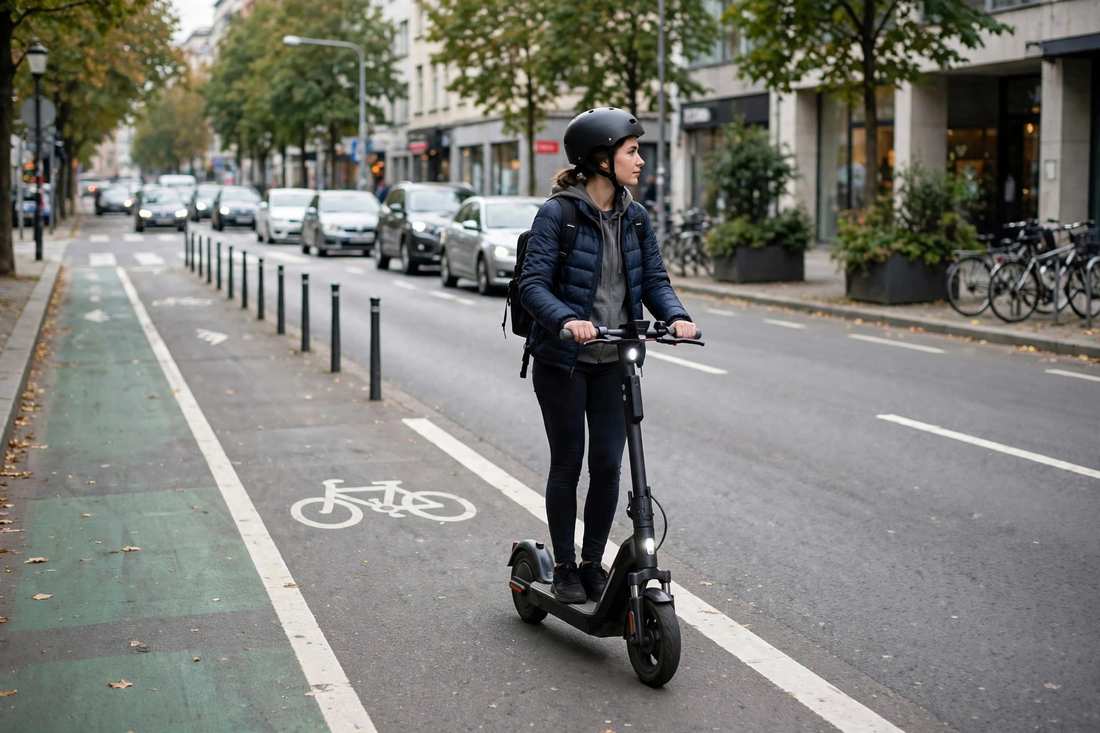
Bike lanes. Where a bike lane exists, most states require scooters to use it instead of the regular traffic lane (Levy Electric, 2026).
Road lanes. When no bike lane exists, most states allow riding on the road as close to the right edge as practicable, the same rule bicycles follow (Levy Electric, 2025).
Sidewalks. Sidewalks are banned in 17 states (Levy Electric, 2025). Where they are allowed, riders typically must yield to pedestrians (ERideHero, 2026).
Highways. Some jurisdictions specifically prohibit state highways even when the posted speed limit would otherwise permit scooters (Levy Electric, 2026).
Do You Need a License, Registration, or Helmet to Ride on the Road?
Most states do not require a license for an electric scooter. A driver’s license or permit is required only in California, Arkansas, Massachusetts, and Missouri (Maxfind, 2025). Because scooters are generally not classed as motor vehicles, registration is usually not required either, but confirm this for your state.
Helmet and age rules vary more. Washington State requires helmets under 17, while Texas has no statewide helmet rule and leaves minimum ages to cities (Levy Electric, 2025). Wear a helmet even where it is optional. Head injuries are among the most common injuries from scooter falls.
Equipment rules also apply in many places. Delaware, for example, requires brakes and requires lights at night (ERideHero, 2026).
How Safe Is Riding an Electric Scooter in Traffic?
Riding in traffic carries real risk. The Consumer Product Safety Commission (CPSC) reported that injuries linked to micromobility devices rose nearly 21% in 2022 compared with 2021 (CPSC, 2024). The category includes e-scooters, e-bikes, and hoverboards.
The same report counted 233 deaths from 2017 through 2022, with reporting still incomplete (CPSC, 2024). The agency’s own safety advice is direct: most deaths involve motor vehicles, and scooters are small and quiet enough that drivers struggle to see them (CPSC, 2024).
Think of it like walking at night in dark clothing. Legal does not mean visible, so lights and reflective gear matter.
How to Check Your Local Electric Scooter Rules in 5 Minutes
You can confirm your rules by checking your state, then your city. Do both, because city rules can be stricter.
- Search “[your state] electric scooter law” and open the state transportation agency or DMV (Department of Motor Vehicles) page.
- Note the speed limit cap, age minimum, helmet rule, and any license requirement.
- Search “[your city] electric scooter ordinance” and look for sidewalk bans or slow zones.
- Check your scooter’s top speed against the state limit. Most states cap scooter speed at 15 to 20 mph on public roads and bike lanes (Levy Electric, 2026).
- Re-check once a year. Laws change, and local ordinances can override state rules (Hiboy, 2026).
Common Mistakes to Avoid When Riding an Electric Scooter on the Road
- Assuming state law is the whole story. A city can ban sidewalk riding or add slow zones even when the state allows both.
- Riding on a road above the speed cap. If your state limits you to roads posted 25 mph or less, a 35 mph road is off limits.
- Skipping lights at night. Several states require them, and drivers need the warning.
- Trusting one website. As the Pennsylvania example shows, published guides can contradict each other.
- Riding a scooter faster than your state’s top speed limit. A scooter that goes 28 mph may fall outside the rules in states that cap devices at 15 to 20 mph.
Frequently Asked Questions About Riding an Electric Scooter on the Road
Can I ride an electric scooter on the road?
In most US states, yes, on roads with a low posted speed limit and in bike lanes. The cap varies by state, commonly 25 to 35 mph. Pennsylvania and a few other places have unclear or stricter rules, so check your state first.
Can I ride an electric scooter on the sidewalk instead?
Sometimes, but often not. Sidewalks are banned in 17 states (Levy Electric, 2025). Where allowed, you must yield to pedestrians. City ordinances may ban it even when the state permits it.
Do I need a license to ride an electric scooter on the road?
Usually no. Only California, Arkansas, Massachusetts, and Missouri require a license or permit (Maxfind, 2025). Check your state’s current rules before you ride.
Is an electric scooter considered a motor vehicle?
Generally no. Electric scooters are usually not classified as motor vehicles, but the definition depends on federal, state, and local law (Hiboy, 2026). That is why registration and insurance are usually not required.
Can I ride an electric scooter on the highway?
Almost never. Highways combine high speeds with no bike lane, and some jurisdictions specifically prohibit state highways (Levy Electric, 2026). Stick to low-speed streets and bike lanes.
Do I need a helmet on an electric scooter?
It depends on your state and your age. Washington requires one under 17, and Texas has no statewide rule (Levy Electric, 2025). Wear one regardless, since the CPSC reports bone fractures and head injuries among common scooter injuries.
Quick Recap Before You Ride
Most states let you ride an electric scooter on low-speed roads and in bike lanes.
The speed limit cap, helmet rule, and sidewalk rule vary by state and city.
Licenses are rare, but equipment and age rules are common.
Cars cause most micromobility deaths, so ride in the bike lane and use lights.
Confirm your local rules with your state transportation agency before your first ride.
References
U.S. Consumer Product Safety Commission, “E-Scooter and E-Bike Injuries Soar; 2022 Injuries Increased Nearly 21%” (2024): https://www.cpsc.gov/Newsroom/News-Releases/2024/E-Scooter-and-E-Bike-Injuries-Soar-2022-Injuries-Increased-Nearly-21
U.S. Consumer Product Safety Commission, “Micromobility Products-Related Deaths, Injuries, and Hazard Patterns: 2017-2019” (2020): https://www.cpsc.gov/s3fs-public/Micromobility-Products-Related-Deaths-Injuries-and-Hazard-Patterns-2017–2019.pdf
Federal Highway Administration, Pedestrian and Bicyclist Safety Tools, micromobility injury data summary: https://highways.dot.gov/safety/pedestrian-bicyclist/safety-tools/pg-2-5-micromobility-products-related-deaths-injuries-and

Leave a Reply