
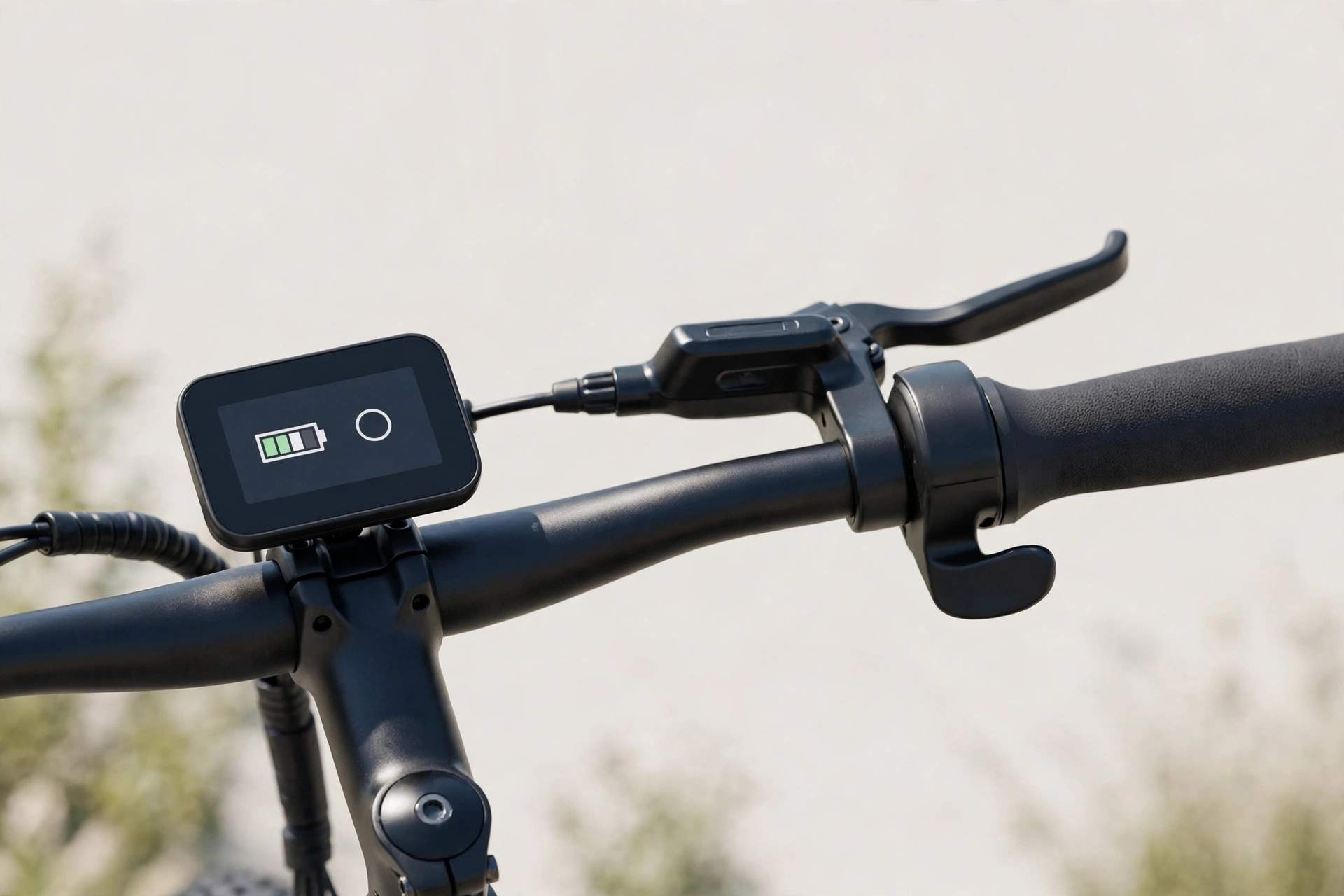
TL;DR
- An ebike throttle not working is most often caused by a low battery, a stuck brake cut-off sensor, or a loose connector, and all three can be checked in about 10 minutes.
- Work in order: battery, display settings, brake sensors, wiring, throttle, then controller. Each step rules out one part of the system.
- A multimeter test on the throttle signal wire tells you whether the throttle or the controller has failed.
- Always disconnect the battery before unplugging or testing any connector.
- If the throttle sends a correct signal and the motor still does nothing, the controller or motor needs professional repair.
Why Is My Ebike Throttle Not Working?
Your ebike throttle stops working when something in the chain from battery to throttle to controller to motor breaks or sends a stop signal. The most common causes are low battery charge, a brake cut-off sensor that thinks the brakes are pulled, a loose or damaged connector, a wrong display setting, or a failed throttle.
The throttle does not move the motor directly. It sends a small voltage signal to the controller (the electronic unit that tells the motor how much power to use). If the signal is missing, wrong, or blocked, nothing happens.
That is why troubleshooting works best as a process of elimination. You test one link in the chain at a time until the fault shows itself.
Safety Steps Before You Start Troubleshooting
Turn the bike off and unplug the battery before touching any connector. Ebike batteries deliver enough current to damage electronics or cause burns if wires short together.
Keep these rules in mind during every step below:
- Remove the battery before unplugging any connector.
- Do not bypass or short pins on the display port to force the motor on.
- Take photos of connector positions before you disconnect anything.
- Reconnect the battery only when you are ready to test.
Step 1: Check the Battery Charge and Connection
Start with the battery. A low or poorly seated battery can make the throttle seem dead even when the throttle itself is fine.
Charge the battery fully, reseat it firmly, and turn the bike on. Check that the display lights up and shows a normal charge level.
If the display stays dark, the problem is power delivery, not the throttle. Check the battery key position, the battery contacts for dirt or corrosion, and any inline fuse or switch your model has. A battery with a tripped Battery Management System (BMS, the circuit that protects the cells) may need a reset or a fresh charge cycle before it outputs power again.
Step 2: Check Display Settings and Riding Mode
Many throttle problems come from settings, not hardware. The throttle can be disabled when the bike is in assist level 0, in a limited mode, or when a speed threshold has not been met.
Look at the display and confirm these points:
- The bike is on and not showing an error code.
- The assist level is above zero, if your bike requires it.
- Walk mode is off.
- Any speed limit or throttle-lock setting matches what you expect.
Some bikes only enable the throttle after you pedal a few strokes or reach a minimum speed. Your owner’s manual lists the exact rule for your model.
Many bikes sold as pedal-assist only (Class 1 in the US) have no throttle at all. If your model has a throttle port but no throttle, a retailer may have limited it in firmware.
Step 3: Test the Brake Cut-Off Sensors
A brake cut-off sensor tells the controller to cut motor power when you pull a brake lever. If a sensor sticks or the magnet shifts, the controller thinks you are braking and ignores the throttle.
To test this, unplug one brake sensor connector at a time with the battery disconnected, then reconnect the battery and try the throttle. If the throttle works after you unplug a sensor, you have found the problem.
Fix it by:
- Cleaning the sensor and lever area with a dry cloth.
- Realigning the magnet or switch so it releases fully when the lever is open.
- Checking that the brake lever springs back all the way.
- Replacing the sensor if it still triggers.
Do not ride with a brake sensor permanently unplugged unless you understand the trade-off. You lose the safety cut-off that stops the motor when you brake.
Step 4: Inspect the Throttle Wiring and Connectors
Loose, corroded, or pinched wires are a common reason an ebike throttle stops responding. Vibration and moisture wear down connectors over time.
With the battery removed, follow the throttle cable from the handlebar to the controller. Look for cuts, kinks, bent pins, and green or white corrosion at the plugs.
Then run a wiggle test. Reconnect the battery, turn the bike on, and gently flex the cable near the throttle and near each connector while you press the throttle. If the motor cuts in and out as you move a section, that section has a break or bad contact.
Reseat each connector firmly. Check that the plug is fully pushed in and that the arrow or color markings line up. Replace any cable with damaged insulation.
Step 5: Test the Throttle With a Multimeter
A multimeter test shows whether the throttle sends a changing signal when you twist or press it. Most throttles with a Hall sensor (a magnetic position sensor) use three wires: power, ground, and signal.
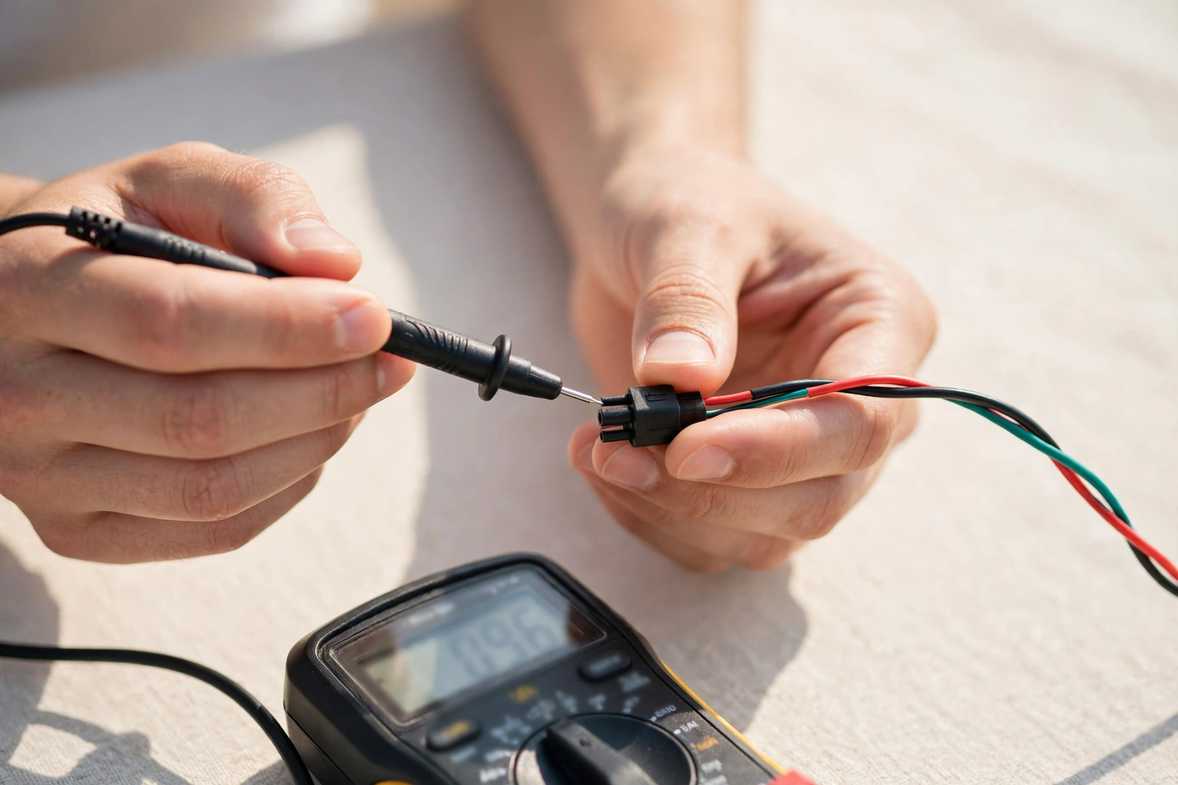
Set the multimeter to DC volts, reconnect the battery, and turn the bike on. Probe the signal wire against ground at the throttle connector. Then move the throttle slowly from rest to full.
A healthy throttle usually shows a low voltage at rest, often near 1 volt, that rises smoothly toward about 4 volts at full. Exact values vary by controller, so check your bike’s documentation. The ebikes.ca throttle testing guide from Grin Technologies is a widely used reference for this method.
Read the result like this:
| Result | Likely Cause | Next Step |
|---|---|---|
| No power at the power wire | Controller or wiring fault | Test the controller and harness |
| Power present, signal never changes | Failed throttle | Replace the throttle |
| Signal changes smoothly, motor still dead | Controller, motor, or lockout | Check brake sensors and controller |
| Signal jumps or drops out | Loose wire or worn throttle | Inspect wiring, then replace the throttle |
Step 6: Check the Controller and Motor
If the throttle signal is correct and the motor still does not respond, the controller or motor is the next suspect. This is the point where most riders should stop and get help.
Signs of a controller problem include a dead motor with a normal display, a throttle that works only sometimes, and a burnt smell near the controller housing. Signs of a motor or Hall sensor fault include a stuttering start or a motor that hums but does not spin.
New bikes and recently updated bikes can also have a configuration limit that disables the throttle. In that case the throttle only looks broken. A dealer can read the controller settings and fix this quickly.
When to Replace the Ebike Throttle
Replace the throttle when the multimeter shows no signal change, the signal jumps around, or the grip or thumb lever is cracked, loose, or sticky after cleaning. Throttles are usually cheap and quick to swap compared with a controller.
Match the replacement to your bike. Check the connector type, the number of wires, and whether it is a thumb, half-twist, or full-twist design. Many throttles work across brands, but the plug and voltage range must fit your controller.
If the replacement does nothing either, the fault is upstream of the throttle.
Common Ebike Throttle Problems and Fixes
| Problem | Likely Cause | Solution |
|---|---|---|
| Throttle does nothing, display is on | Brake cut-off sensor stuck | Unplug each sensor to test, then clean or replace |
| Throttle cuts in and out | Loose connector or damaged cable | Reseat plugs, replace the damaged section |
| Throttle works only when pedaling | Bike setting or speed threshold | Check display settings and the manual |
| Delayed or weak response | Low battery or worn throttle | Charge the battery, test signal voltage |
| Throttle sticks at full power | Debris in the throttle or failed sensor | Disconnect the battery and replace the throttle |
Frequently Asked Questions About Ebike Throttle Not Working
The motor and battery are fine, so the fault is in the throttle circuit or a throttle lockout. Check the throttle connector, the throttle signal voltage, and any display setting that disables the throttle. A failed throttle is the most likely cause.
The brake cut-off sensor is triggering and cutting motor power. Clean the sensor, realign its magnet, and make sure the brake lever fully returns to its resting position. Replace the sensor if the problem continues.
Set the meter to DC volts, probe the signal wire against ground with the bike on, and move the throttle from rest to full. The reading should rise smoothly. A flat or jumping reading means the throttle or its wiring has failed.
Yes. A low battery or a tripped BMS can cut power to the controller, so the throttle gets no response. Charge the battery fully, reseat it, and check that the display powers on normally.
Most replacement throttles are inexpensive parts, and the swap takes a few minutes with basic tools. A shop adds labor, and a controller repair costs noticeably more than a throttle. Get a quote before approving any work.
A dead throttle is safe to ride with because you can still pedal. A throttle that sticks open or surges is not safe, so disconnect the battery and stop riding until it is fixed.
Go to a shop if the throttle signal tests correctly but the motor stays dead, if you smell burning, or if the bike is under warranty. Opening the controller yourself can void coverage.
Quick Recap of the Troubleshooting Order
- Charge and reseat the battery, then confirm the display powers on.
- Check the assist level, riding mode, and any throttle lock setting.
- Test the brake cut-off sensors by unplugging them one at a time.
- Inspect and wiggle-test the throttle wiring and connectors.
- Measure the throttle signal voltage with a multimeter.
- Replace the throttle, or take the bike to a shop if the controller is the cause.
References
- Grin Technologies, ebikes.ca, “Throttle Testing” guide: http://www.ebikes.ca/documents/ThrottleTesting.pdf
- Velotric, “Troubleshooting Common Electric Bike Problems”: https://velotricbike.com/blogs/story-landing/electric-bike-troubleshooting-guide
- Upway, “How to Fix the Throttle on an E-Bike: Troubleshooting Tips”: https://upway.co/blogs/news/how-to-fix-electric-bike-throttle

Leave a Reply