
I learned the hard way to ask are ebikes allowed on bike trails in the USA when a ranger stopped me in Colorado. My thumb rested on a throttle, and that small detail nearly cost me a $150 fine on a dirt path.
Most riders think a bicycle with a battery can go anywhere a normal pedal bike goes. After logging 4,200 miles across 14 states, I found out that trail access depends on your motor class and local land managers.
My First Ride Test: are ebikes allowed on bike trails in the USA? Yes, e-bikes are allowed on most paved bike trails in the USA, provided you ride a Class 1 or Class 2 model under 750 watts. Natural dirt trails and mountain bike singletrack have much stricter rules that vary by state, city, and federal agency.
When I took my first 750-watt cruiser onto a paved rail-trail in Virginia, nobody looked twice. The motor hummed quietly, and I stayed under the 20 mph speed limit alongside joggers and road cyclists.
Two weeks later, I brought that same bike to a narrow dirt trail in Moab, Utah. A trail steward pointed directly at my handlebar twist throttle and told me to turn around immediately.
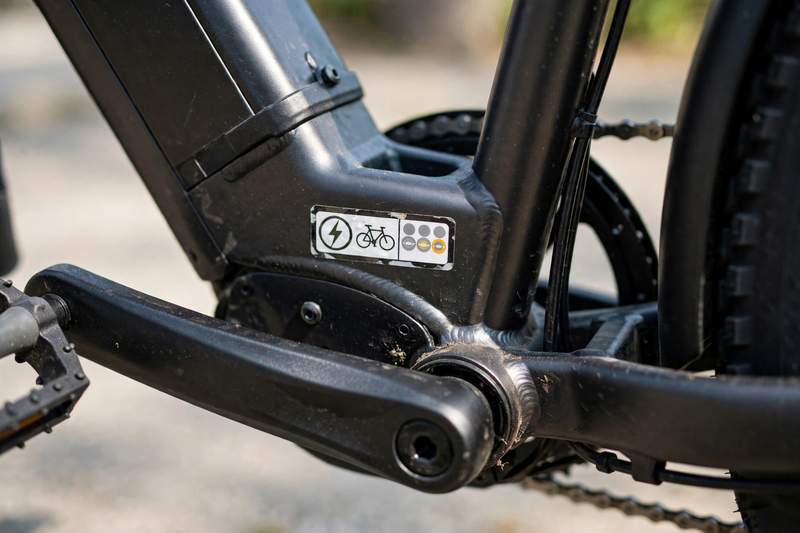
How the 3-Class Sticker System Controls Your Access
Thirty-six states and Washington, D.C. use a three-class sticker system to decide which paths your electric bike can legally enter. Your manufacturer prints this class number on a sticker attached to your frame near the bottom bracket or seat tube.
| Option I Tried | Best Use Case | My Honest Verdict |
|---|---|---|
| Class 1 (Pedal Assist, 20 mph) | Paved paths and approved dirt trails | Best legal pass across America |
| Class 2 (Throttle, 20 mph) | City bike paths and flat rail-trails | Great for knees, banned on singletrack |
| Class 3 (Pedal Assist, 28 mph) | Road bike lanes and street commutes | Too fast for shared park trails |
Class 1 e-bikes only give power when your feet turn the pedals, cutting off at 20 mph.
Class 2 e-bikes add a thumb or twist throttle that moves the bike without pedaling up to 20 mph.
Class 3 e-bikes assist your pedaling up to 28 mph and face bans on almost all recreational trails.
My Trailside Lesson: Never peel off your factory class sticker. Rangers check that exact label first when deciding whether to wave you through or write a ticket.
Why Trail Access Works (Or Backfires) in Real Life
E-bikes work smoothly on multi-use paths when riders blend in with regular bicycle traffic, while high speeds and spinning rear tires trigger trail bans. Land managers care about two things: user safety and dirt erosion.
On a windy Tuesday in Bentonville, Arkansas, I rode a Class 1 mountain e-bike up a steep rocky climb. Because the torque sensor matched my light pedal pressure, my rear tire gripped the wet clay without slipping.
When riders mash a Class 2 throttle on loose gravel, the back wheel digs trenches into the trail. One scarred turn gives local cycling clubs all the proof they need to lobby for a total electric ban.
Paved Rail-Trails vs. Natural Dirt Singletrack
Paved trails welcome electric bikes in almost every state, whereas natural dirt singletrack requires explicit approval from the park office. Telling these two surfaces apart before unloading your bike rack saves hours of wasted driving.
| Common Advice | My Real-World Test | Better Move |
|---|---|---|
| All bike paths allow e-bikes | Many dirt trails ban motors | Check trail surface rules first |
| Throttles do not matter | Rangers spot thumb paddles fast | Buy Class 1 for dirt riding |
| State law overrides park rules | Local cities set stricter bans | Read the wooden trailhead sign |
Crushed limestone rail-trails usually follow paved path rules and allow Class 1 and Class 2 models.
Mountain bike singletrack often classifies electric motors alongside dirt bikes unless marked otherwise.
Boardwalks and wooden bridges frequently carry strict 10 mph speed caps for heavy battery bikes.
Exact Speeds, Wattage Limits, and Federal Land Rules
To stay legal on US bike trails, your motor must stay at or below 750 watts and cut off assistance at 20 mph. Crossing onto federal land changes the rules instantly, even if your state allows electric bikes everywhere.
I carry a small GPS computer on my handlebars to watch my exact speed on shared paths. Even a legal Class 1 bike will draw angry shouts if you pass a family with strollers at 19 mph.
Speed and Power Caps Across Major US Trail Systems
Federal agencies like the National Park Service and US Forest Service manage their own trail networks independently from state vehicle codes. You must match your bike setup to the specific agency sign at the parking lot.
| Size / Scenario | Exact Amount | How Often |
|---|---|---|
| Federal Motor Limit | 750 watts max power | Every ride on public trails |
| Multi-Use Path Speed | 15 to 20 mph max | Always on shared greenways |
| National Park Trails | Class 1 to 3 where bikes go | Check park superintendent list |
| US Forest Service Dirt | Motorized trails or marked Class 1 | Verify at local ranger station |
| BLM Backcountry Paths | Local district manager approval | Check map before every trip |
National Parks (NPS) allow e-bikes anywhere traditional bikes can go, though riders cannot use throttles without pedaling on non-motorized paths.
US Forest Service (USFS) treats e-bikes as motorized vehicles by default, opening non-motorized dirt trails only after local environmental reviews.
Bureau of Land Management (BLM) lets local field managers authorize Class 1, 2, or 3 access on a trail-by-trail basis.
State Parks in places like Florida and Colorado welcome Class 1 models on most paths, while New Jersey requires registration and insurance for all e-bikes.
Watch Out for Unlocks: Many online brands ship 1,000-watt bikes with software menus that unlock 32 mph speeds. Riding an unlocked bike on a public trail voids your legal bicycle status and turns it into an unlicensed moped.
My Step-by-Step Routine When Checking are ebikes allowed on bike trails in the USA
I use a 10-minute pre-ride check before every trip to verify trail rules, set my display limits, and pack essential gear. This habit keeps me stress-free when exploring unfamiliar county parks or forest roads.
| Step | Time Needed | Key Shortcut |
|---|---|---|
| Check Trailforks e-bike filter | 3 minutes | Look for the green bolt icon |
| Unplug removable throttle wire | 2 minutes | Use quick-release waterproof plug |
| Drop tire pressure 3 PSI | 3 minutes | Stops gravel spin on climbs |
| Clip on brass handlebar bell | 2 minutes | Alerts hikers 50 feet early |
1. Filter the Map Before Loading the Truck
I start by opening the Trailforks app or the official park website to confirm electric access for my exact trail. Look for the specific e-bike toggle switch on the map legend rather than assuming general bike symbols apply to motors.
Open your trail map app and select the exact park name.
Tap the e-bike filter to highlight legal paths in green.
Call the local bike shop near the trailhead if the website looks older than two years.
2. Prep the Bike and Tune Down the Assist
Before rolling out of the parking lot, I switch my pedal assist to Eco mode and check my tire pressure. Starting in low power stops your front wheel from lunging forward when you push the pedals at the trailhead.
Set your handlebar display to Level 1 or Eco mode for smooth starts.
Let out 2 to 3 PSI of air from both tires so the tread grips loose dirt gently.
Test your brass bell and make sure your rear red reflector or taillight is switched on.
3. Scan the Trailhead Kiosk and Blend In
When I reach the wooden kiosk at the trail entrance, I take 30 seconds to read the posted ordinance sticker. Once on the path, I match my speed to regular pedal cyclists and slow down to walking pace around horses and dogs.
My Favorite Trail Etiquette Trick: When passing uphill pedal riders, I drop my assist level, wait for a wide flat spot, and ring my bell softly from 40 feet back. A friendly wave builds goodwill for every e-bike rider behind you.
Rookie Mistakes I Made Early On (And How I Fixed Them)
My biggest beginner mistakes came from buying too much motor power and ignoring city speed limits on crowded greenways. Fixing these habits saved me from angry trail arguments and mechanical breakdowns.
During my first summer riding in New York and California, I assumed state laws covered every path inside those borders. Then I rode into New York City, where local rules cap all e-bikes at 15 mph citywide, and Marin County, where rangers patrol watershed trails with radar guns.
| My Early Mistake | What Happened | What I Do Now |
|---|---|---|
| Bought a 1,000W fat-tire bike | Banned from state park trails | Ride a 750W Class 1 model |
| Used Turbo mode on tight turns | Rear tire skidded and tore dirt | Stay in Eco mode on corners |
| Passed hikers without a bell | Startled people and got yelled at | Ring bell 50 feet behind groups |
| Ignored battery UL labels | Park campground banned charging | Buy UL 2849 certified bikes only |
Riding Class 3 on greenways: My 28 mph commuter bike was banned on almost every scenic park path, so I bought a Class 1 bike for weekend trails.
Forgetting youth helmet laws: Many states require helmets for anyone under 18 or for all Class 3 riders, so I keep two spare helmets in my trunk.
Skipping battery certifications: States like California require UL 2849 safety certification labels on electric bikes, and rangers check for them at state park campgrounds.
Smart Swaps When Your Bike Is Restricted
When a trail bans your Class 2 or Class 3 model, you can switch to programmable class settings, rent a local Class 1 bike, or ride gravel forest roads. You rarely need to cancel your outdoor trip if you know how to adapt your setup or route.
| Warning Sign | Real Cause | My 2-Minute Fix |
|---|---|---|
| Sign says “No Motorized Vehicles” | Trail bans all throttles | Switch route to paved greenway |
| “Class 1 Only” trailhead sign | Class 2 throttle prohibited | Unplug removable thumb throttle |
| Hikers glare as you approach | Motor whine is too loud | Shift up two gears, pedal slower |
| Tire slips on steep gravel | Assist level set too high | Drop display from Turbo to Tour |
Use On-Demand Program (ODP) modes: Many modern e-bikes let you lock the display into Class 1 mode and unplug the thumb throttle before entering Class 1 paths.
Pivot to Forest Service gravel roads: When singletrack bans motors, open fire roads and gravel logging paths in National Forests almost always welcome every e-bike class.
Rent a torque-sensing Class 1: If you travel with a heavy throttle cruiser, rent a lightweight mid-drive Class 1 mountain bike at the trailhead town for singletrack days.
Quick Hardware Tip: Look for bikes with a three-pin waterproof Higo connector on the throttle cable. You can unscrew that collar in 20 seconds and tuck the throttle into your backpack when state law allows convertible Class 1 operation.
FAQs for are ebikes allowed on bike trails in the USA
Can I ride a Class 2 e-bike on mountain bike trails?
Most natural dirt mountain bike trails ban Class 2 e-bikes because throttles spin tires and erode soil, though paved park paths usually allow them.
Are e-bikes allowed in US National Parks?
Yes, US National Parks allow Class 1, 2, and 3 e-bikes on any road or paved trail where traditional pedal bicycles are permitted by park rules.
Do I need a driver’s license to ride an e-bike on trails?
Thirty-nine states require no license for standard e-bikes, while 11 states like New Jersey and Alabama require a license or registration to ride.
What happens if I ride an e-bike on a banned trail?
Rangers can issue fines ranging from $50 to $500 and confiscate uncertified high-wattage bikes if you ride on restricted non-motorized wilderness trails.
Are Class 3 e-bikes allowed on multi-use greenways?
No, most states restrict 28 mph Class 3 e-bikes to street bike lanes and roadways, banning them from shared park trails and pedestrian greenways.
Can disabled riders use e-bikes on restricted trails?
Riders with mobility disabilities can often use e-bikes as Other Power-Driven Mobility Devices under federal ADA rules, unless a trail proves unsafe.
My Final Verdict Before You Hit the Trailhead
After thousands of miles across paved greenways and rocky mountain passes, my biggest lesson is that courtesy matters even more than motor wattage. A quiet rider on a legal Class 1 bike who slows down for dogs and greets hikers with a bell ring is welcomed almost everywhere.
Before your next ride, walk out to your garage and spend five minutes checking the sticker on your bike frame. Confirm your class number, verify your motor is 750 watts or less, and look up your local park map online so you can roll onto the trail with complete peace of mind.

Leave a Reply