
TL;DR
- Replace ebike brake pads when the friction material wears down to about 1 mm, and never ride them below 0.5 mm (BikeGremlin).
- Brands set different limits: Shimano and SRAM sit near 1 mm, Hope and TRP at 1.5 mm, and Magura at 2 mm (BikeGremlin).
- Pads on an ebike typically last 500 to 1,000 miles, and heavier riders or hilly routes shorten that (Leoguar Ebikes).
- A weak lever, a lever that pulls closer to the bar, squealing, or a metal-on-metal scrape all mean you should inspect the pads now.
- Check pad thickness once a month, and replace both pads in a brake together.
When Is the Right Time to Replace Ebike Brake Pads?
Replace ebike brake pads when the friction material is down to roughly 1 mm, or sooner if your brake maker lists a higher limit. Replace them right away if they are contaminated, damaged, or worn unevenly (Fiido).
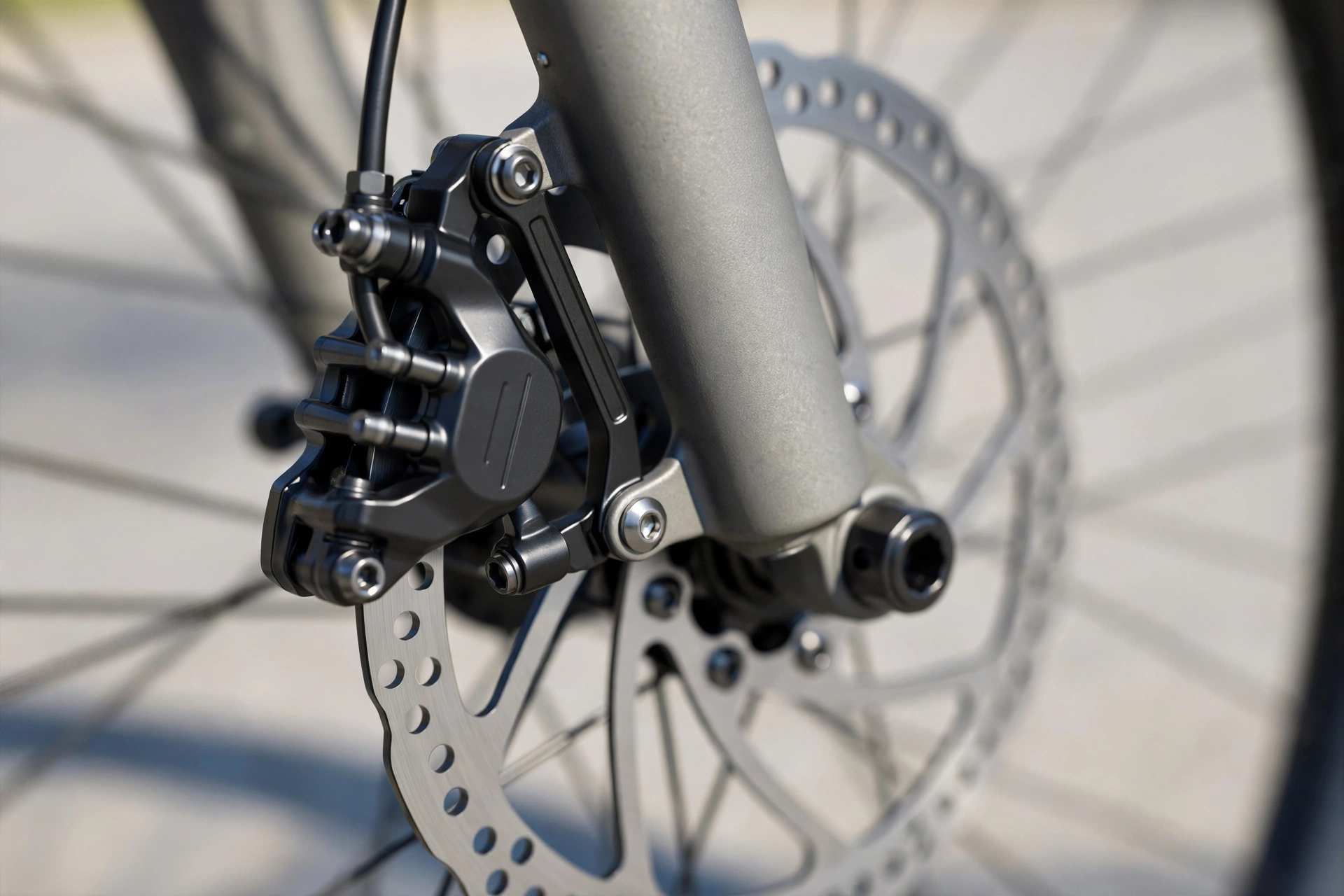
Friction material is the pad layer that grips the rotor. The rotor (also called the brake disc) is the metal disc bolted to your wheel hub. The metal plate behind the friction material is the backing plate. When friction material runs out, the backing plate cuts into the rotor.
Waiting too long costs more than replacing early. Pads are cheap, and a scored rotor is not.
How Thick Should Ebike Brake Pads Be? Replacement Limits by Brand
Most disc brake pads should be replaced at 1 mm of friction material, and 0.5 mm is the absolute floor. Below 0.5 mm you risk faster rotor wear and uneven braking (BikeGremlin). Some brands want an earlier swap, as the table shows.
| Brand | Replace when friction material reaches | Source |
|---|---|---|
| Shimano | Below 1 mm, never below 0.5 mm | BikeGremlin |
| SRAM and Avid | About 1 mm | BikeGremlin |
| Hope | Below 1.5 mm | BikeGremlin |
| TRP | Below 1.5 mm, definitely at 1 mm | BikeGremlin |
| Magura | 2 mm | BikeGremlin |
Some brakes use a combined measurement instead. Bike24 lists a minimum total thickness (pad plus backing plate) of 2.5 mm for Shimano, 3 mm for SRAM, and 2.5 mm for Magura. Always check which measurement your manual uses.
How Do You Measure Brake Pad Thickness?
Measure only the friction material, not the backing plate. Remove the wheel or look through the caliper window with a flashlight. Compare the pad to a new pad of the same model, or to a 1 mm reference such as a thin spare pad you keep in your toolbox (BikeGremlin).
If you cannot see clearly, pull the pads out of the caliper. It takes a few minutes with basic tools.
What Are the Signs of Worn Ebike Brake Pads?
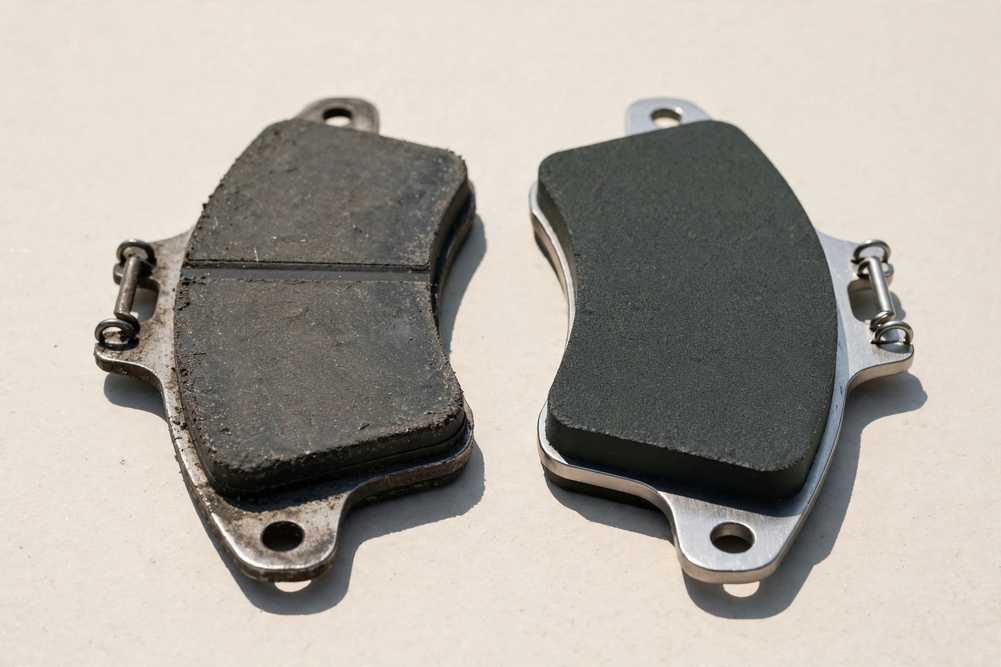
The clearest signs of worn ebike brake pads are weak braking, a lever that pulls farther than usual, and squeaking. Bike24 lists these along with pad material under 1 mm as the main triggers for replacement. Any one of them justifies a quick inspection.
- Braking power feels weaker, so you need more lever force to stop at the same speed.
- The lever travels farther before the brake bites, which happens as the pads thin and the pistons extend.
- A sudden deep sag in the lever on a hard stop can mean the pads are at their last moments of use (Electric Bike Review forum).
- You hear a squeal, which can come from wear, contamination, or glazing (HOVSCO).
- You hear a metal-on-metal scrape, which means the backing plate is touching the rotor, and you should stop riding (HOVSCO).
- One pad looks thinner than the other, which points to a sticking caliper piston or poor alignment.
What Do Worn Ebike Brake Pads Sound Like?
A high squeal can mean worn, dirty, or glazed pads. A harsh grinding or scraping noise means the friction material is gone and metal is hitting metal. HOVSCO advises stopping and inspecting immediately in that case.
How Often Do Ebike Brake Pads Need Replacing?
Ebike brake pads usually need replacing every 500 to 1,000 miles. Riding style, terrain, and weather change that number a lot. Leoguar Ebikes recommends checking thickness monthly and replacing at 1.5 mm or less.
Here is how common conditions affect pad life:
- Hilly routes mean long, repeated braking, which wears pads faster.
- Heavy riders and loaded cargo bikes carry more momentum into every stop.
- Wet, muddy, or gritty roads act like sandpaper on the friction material.
- Stop-and-go commuting wears pads faster than steady rides on flat paths.
Treat mileage as a rough guide only. A thickness check tells you more than an odometer.
Why Do Ebike Brake Pads Wear Faster Than Regular Bike Pads?
Ebike brake pads wear faster because ebikes are heavier and faster than standard bikes, so the brakes absorb more energy on every stop. HOVSCO’s engineering team puts it plainly: a heavier bike at higher speed means sooner replacement.
Think of it like car tires. A loaded truck wears tires faster than a compact car on the same road. Your brake pads are the tires in this comparison, and the motor and battery add the weight.
This is also why a pad that lasted two years on your old bicycle may last only one season on your ebike.
When Should You Replace the Rotor Along With the Pads?
Replace the rotor when it wears down to its minimum thickness, which is usually 1.5 mm. Shimano rotors should be replaced at 1.5 mm or less, and a new rotor should always get new pads (Pedelecs forum, citing Shimano). Most rotors have the minimum thickness stamped on the surface.
Other brands set slightly different limits (BikeGremlin):
- SRAM and Avid: 1.55 mm
- Magura: 1.8 mm
- Hope, TRP, and Formula: 1.5 mm
Rotors typically outlast two or more sets of pads. If you ride pads down to the backing plate, that count drops fast.
Common Mistakes When Replacing Ebike Brake Pads
The most common mistakes are replacing only one pad, ignoring the rotor, and skipping the bedding-in step. Each one leads to weaker or uneven braking.
- Replacing a single pad causes uneven braking, and the bike can pull to one side. Always replace both pads in the same brake (Leoguar Ebikes).
- Measuring the backing plate along with the friction material gives a false reading and leads to late replacement.
- Skipping bedding leaves new pads weak or grabby on the first rides, so the job is not done until the lever feels firm (HOVSCO).
- Ignoring the manual causes problems because each brand sets its own limit.
- Riding on squealing pads for weeks lets a cheap fix turn into a rotor replacement.
Frequently Asked Questions About Replacing Ebike Brake Pads
Replace them when the friction material reaches about 1 mm, or at your brake maker’s stated limit. Replace them sooner if you notice weak braking, a lever that pulls too far, or grinding noises.
Check them once a month. Heavy riders, hilly routes, and wet weather justify checking more often.
Most last between 500 and 1,000 miles (Leoguar Ebikes). Your actual figure depends on your weight, terrain, and braking habits.
No. Replace both pads in a brake together. A single new pad gives uneven braking and can pull the bike to one side (Leoguar Ebikes).
Braking power drops, stopping distance grows, and the backing plate can score the rotor once the friction material is gone. A scraping sound means you should stop and inspect immediately (HOVSCO).
Yes, with basic tools, and the job takes a few minutes per brake. Bed the new pads in afterward so braking feels firm. If you are unsure, a bike shop can do it quickly.
Key Takeaways
- Replace pads at about 1 mm of friction material, and never ride below 0.5 mm.
- Check your brand’s limit, because Magura asks for 2 mm while Shimano allows less.
- Inspect pads monthly and act on any weak lever, squeal, or scraping noise.
- Replace pads in pairs, and check the rotor against its 1.5 mm limit at the same time.
References
- BikeGremlin – “When to Replace Bicycle Disc Brake Pads” – https://bike.bikegremlin.com/20335/when-to-replace-bicycle-disc-brake-pads
- Bike24 – “How to Replace Bike Disc Brake Pads” – https://bike24.com/advice/repair-maintenance/how-to-replace-bike-disc-brake-pads
- HOVSCO – “When to Replace E-Bike Brake Pads” – https://www.hovsco.com/blogs/knowledge-base/when-to-replace-e-bike-brake-pads

Leave a Reply