

[Published: June 17, 2026 | Last updated: June 17, 2026] | 8 min read
TL;DR
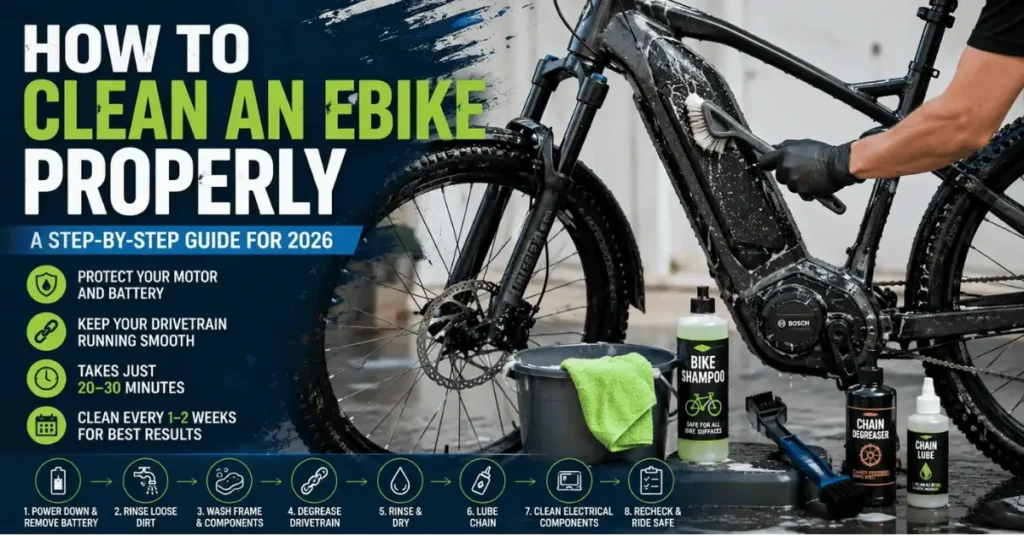
- Properly cleaning an e-bike means avoiding high-pressure water and steam jets, as they can force moisture into the motor and drive unit (Bosch eBike Systems, 2025).
- Most ebike motors and batteries carry IP ratings between IP54 and IP67 – that number tells you exactly how much water exposure the electronics can handle.
- The full process takes 20-30 minutes and needs five core tools: a bucket, a soft brush, bike-specific shampoo, chain degreaser, and chain lube.
- Power down the bike and disconnect the battery before you touch a hose or sponge – this is the step most riders skip.
- Clean your ebike every 1-2 weeks with regular riding, and immediately after any ride in rain, mud, or salted roads.
Why eBike Cleaning Differs From Regular Bike Washing
An ebike carries a motor, a battery pack, and a wiring harness that a standard bicycle does not have. Water and pressure that a regular bike tolerates without issue can damage these electronics on an e-bike.
Manufacturers rate ebike components with an IP (Ingress Protection) code, a two-digit number that measures resistance to dust and water. The first digit covers dust, the second covers water – higher numbers mean stronger protection.
| Component | Typical IP Rating | What It Means |
|---|---|---|
| Bosch Active/Performance Line motor | IP54 | Protected against dust and water splashes, not jets or submersion |
| Shimano STEPS battery | IPX5 | Withstands low-pressure water jets from any direction |
| Bafang motor and controller | IP65 | Dust-tight and resistant to low-pressure water jets |
(Green Pedel, 2021)
None of these ratings cover a pressure washer or garden hose set to a jet nozzle. That single detail is why ebike-specific cleaning steps exist.
What You Need Before You Clean Your eBike
- A bucket of warm water and a separate bucket of clean rinse water
- A soft-bristle brush and a microfiber cloth or two
- Bike-specific shampoo (regular dish soap can strip protective coatings)
- Chain degreaser and bike-specific chain lube
- A soft toothbrush for tight spots around the motor housing and display
Check your owner’s manual for your model’s exact battery-removal process before starting, since this varies by brand.
Step 1: Power Down and Remove the Battery
Turn off the ebike completely and remove the battery if your model allows it. Most mid-drive systems from Bosch, Shimano, and Bafang use a removable or lockable battery pack designed for exactly this.
If your battery is fixed to the frame, leave it in place but make sure the charging port cover is closed and seated. Never clean a bike that is actively charging.
Step 2: Rinse Away Loose Dirt and Grime
Use a garden hose on a gentle, low-pressure setting, or simply a wet cloth, to knock off loose mud and dust before you apply any soap. Keep the nozzle a few feet from the bike and never aim a jet directly at the motor, battery port, or display.
Bosch eBike Systems explicitly warns against steam jets and high-pressure cleaners, since water can penetrate the drive unit through seals that are not built for that kind of pressure (Bosch eBike Systems, 2025).
Step 3: Wash the Frame, Wheels, and Components
Dip your soft brush in the soapy bucket and work from the top of the bike down: handlebars, stem, top tube, seat post, then down to the fork and frame. This top-down order keeps dirty runoff from re-soiling parts you already cleaned.
If your ebike has disc brakes, keep soap away from the rotors and pads. Soap residue on a rotor causes squealing and reduced stopping power, so wipe that area with a dry cloth instead.
Step 4: Degrease and Clean the Drivetrain
Apply chain degreaser to the chain, cassette, derailleur, and chainring while backpedaling so the degreaser reaches every link. Let it sit for two to three minutes to loosen built-up grime.
Scrub with your brush or a dedicated chain-cleaning tool, working in the same top-down logic as the rest of the bike. REI’s bike maintenance guide notes the chain is the component most at risk for wear, so it deserves the most attention in this step (REI, 2025).
Step 5: Rinse and Dry Every Surface
Rinse the whole bike with clean water from your second bucket or a low-pressure hose, again avoiding direct sprays near the motor, battery compartment, and display. Then dry every surface with a microfiber cloth, paying extra attention to the chain and any exposed bolts.
Standing water left on metal parts overnight invites rust, especially on the chain and chainring teeth.
Step 6: Lubricate the Chain
Once the chain is completely dry, apply one drop of bike-specific lube to each roller while backpedaling slowly. REI recommends letting the lube sit for a few minutes before wiping off the excess, since lube left on the outside of the chain just attracts more dirt (REI, 2025).
Choose a wet lube if you ride in rain or mud regularly, and a dry lube if you mostly ride in dry conditions. Skip WD-40 here – it cleans but does not lubricate well enough for a drivetrain.
Step 7: Clean the Display, Sensors, and Electrical Contacts
Wipe the display screen, handlebar controls, and any speed or torque sensors with a barely damp microfiber cloth. These parts are sealed against splashes but not against scrubbing with a wet brush.
For battery contacts and charging ports, use a dry cloth or a soft toothbrush with no liquid at all. Moisture trapped in a contact point can cause corrosion or a poor connection later.
Step 8: Reattach the Battery and Run a Function Test
Reinsert the battery if you removed it, then power on the bike. Confirm the battery is seated correctly, the motor engages when you pedal, and the display responds to every button press.
Bosch eBike Systems lists this function test as the final step of every cleaning session, along with a quick check of brakes, lights, and tire pressure (Bosch eBike Systems, 2025). If anything feels off – a delayed motor response, a flickering display – stop riding and have it inspected before your next trip.
How Often to Clean Your eBike
A light wipe-down after every ride keeps grime from building up on the chain and frame. A full wash with shampoo and degreaser once every one to two weeks covers most regular commuters.
Ride in rain, mud, or on salted winter roads? Clean the bike the same day if possible. Salt and grit accelerate corrosion on the chain and any exposed metal far faster than dry dust does.
Common Problems When Cleaning an eBike and How to Fix Them
| Problem | Likely Cause | Solution |
|---|---|---|
| Display won’t turn on after cleaning | Moisture in the charging port or connector | Dry the port fully with a cloth, wait 30 minutes, then retry |
| Brakes squeal after washing | Soap or degreaser residue on the rotor | Clean the rotor with isopropyl alcohol or a dedicated rotor cleaner |
| Chain feels gritty after lubing | Lube applied before the chain was fully dry or degreased | Re-strip with degreaser, dry completely, then re-lube |
| Motor feels sluggish post-wash | Water near a sensor or connector seal | Let the bike air-dry for several hours before riding again |
Frequently Asked Questions About Cleaning an eBike
How often should I clean my ebike?
Wipe it down after every ride and do a full wash every one to two weeks for regular riders. Clean it the same day after riding in rain, mud, or salt.
Can I use a garden hose to clean my ebike?
Yes, but only on a gentle, low-pressure setting, and never aimed directly at the motor, battery port, or display. A pressure washer or steam jet can force water past seals not built to handle that force.
Is it safe to clean the battery and motor housing?
A damp cloth is safe for wiping these areas. Avoid spraying water directly at battery ports or motor seams, and never submerge a removable battery in water.
What is the difference between IP54 and IP65 ratings?
IP54 protects against dust and light water splashes only. IP65 adds protection against low-pressure water jets from any angle, making it more resistant overall, though neither rating covers submersion or pressure washing.
Can I use WD-40 on my ebike chain?
WD-40 works as a cleaner but not as a long-term lubricant for a drivetrain. Use a bike-specific wet or dry chain lube instead, chosen based on your typical riding conditions.
How do I clean the display and electrical contacts safely?
Use a barely damp microfiber cloth for the display and a completely dry cloth or soft toothbrush for battery contacts and charging ports. Skip liquid cleaners on any electrical contact point.
Summary
- Power down and remove the battery before cleaning, then rinse with low pressure only.
- Wash top-down with bike shampoo, keeping soap away from disc rotors.
- Degrease, rinse, and fully dry the drivetrain before applying fresh chain lube.
- Clean the display and contacts with minimal moisture, then run a function test before riding again.
References
- Bosch eBike Systems – eBike Maintenance Guide
- REI Expert Advice – How to Clean a Bike: Steps for Washing a Bike
- Green Pedel – Water Resistance Ratings
Leave a Reply