
TL;DR
- Light surface rust comes off with degreaser, a stiff brush, and fresh lube, with no need to remove the chain.
- Heavier rust needs a white vinegar soak of 30 minutes to 2 hours, followed by a rinse, a baking soda neutralizing bath, and full drying.
- The job takes 45 minutes to 2 hours, depending on rust level and whether you remove the chain.
- Remove the battery before you touch the drivetrain, because an accidental pedal press can trigger motor assist.
- Replace the chain if links stay stiff after cleaning or a chain checker shows it is worn. Rust does not reverse stretch.
What You Need Before You Start
You need a degreaser, a stiff brush, rags, white vinegar, baking soda, and chain lube. For the soak method, add a chain breaker or a compatible master link, plus a plastic container.
- A bike-specific degreaser, or dish soap and hot water
- A stiff nylon brush and an old toothbrush for the rollers
- Clean rags and a bucket of water
- White vinegar and baking soda for heavy rust
- A wet or dry chain lube suited to your riding conditions
- Nitrile gloves and eye protection
- A chain checker tool (optional but useful)
- A chain breaker or a new master link, if you plan to remove the chain
Step 1: Power Down the Ebike and Remove the Battery
Switch the system off and take the battery out of its mount before you do anything else. Ebike motors can engage when you turn the cranks with the system live, and a spinning chain near your fingers causes real injuries.
Put the bike in a work stand or lean it on a wall so the rear wheel can spin freely. Lay cardboard under the drivetrain to catch rust flakes and degreaser.
Step 2: Judge How Bad the Rust Is
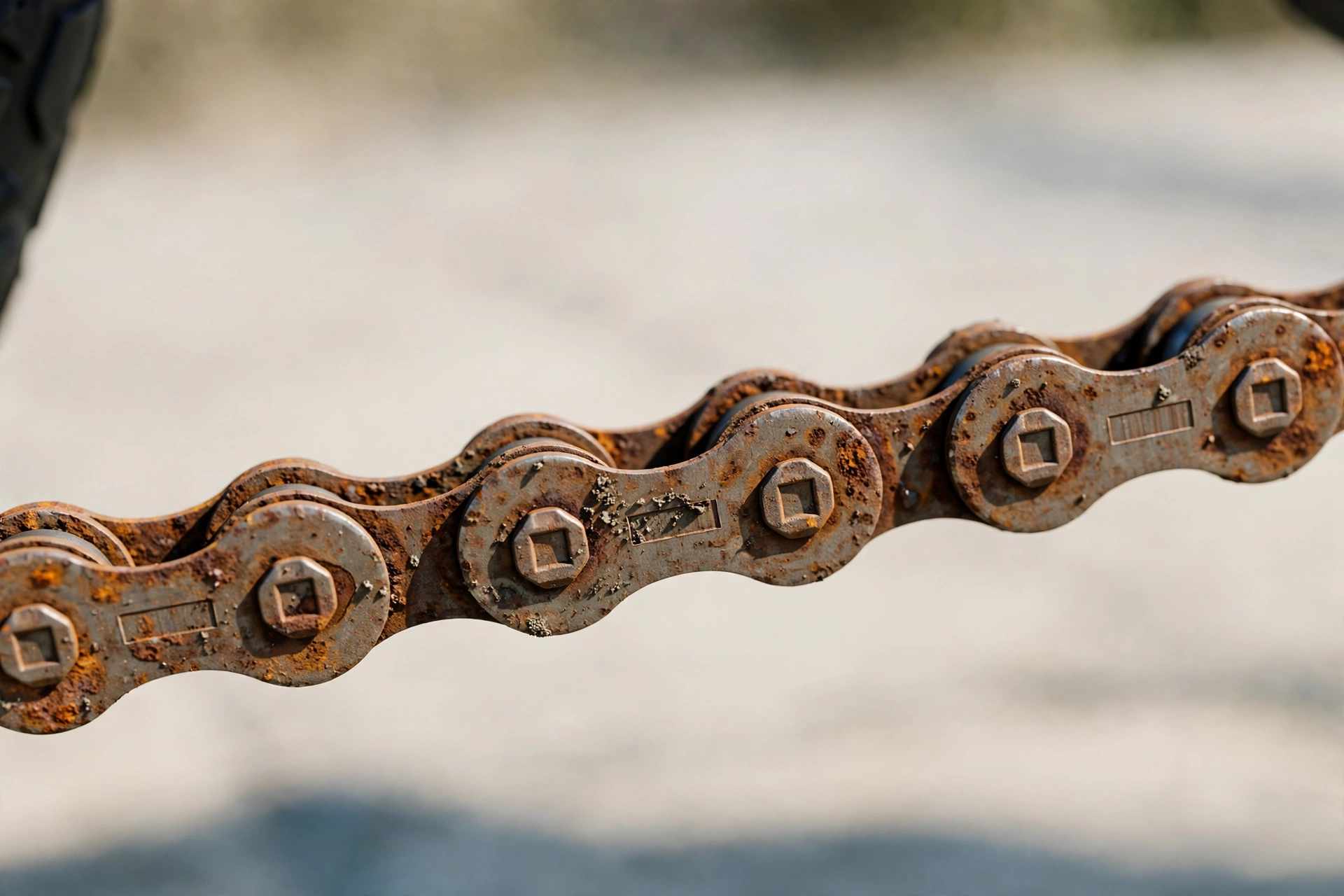
Light rust is an orange film that wipes partly off with a rag, while heavy rust is flaky, pitted, or has locked links. This decides which method you use.
Bend the chain sideways and watch the links. If every link flexes freely, you are dealing with surface rust. If some links stay stiff or kink, the pins and rollers have rusted internally. Stiff links need the vinegar soak.
Step 3: Remove Light Surface Rust with Degreaser and a Brush
Light rust comes off in about 20 minutes with degreaser and scrubbing, and the chain can stay on the bike.
Spray or brush degreaser along the full length of the chain while you turn the cranks backward.
Scrub the outer plates, then the rollers, with a stiff brush.
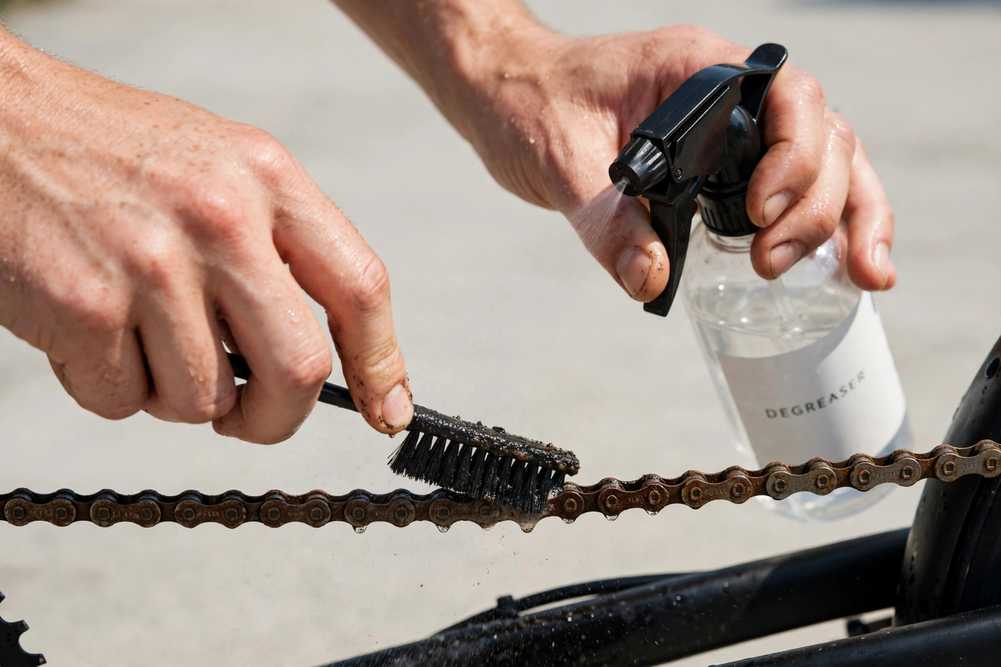
Rinse with a damp rag or low-pressure water. Avoid pointing a hose at the motor or bearings.
Dry the chain with a clean rag, then run it backward through the rag while pinching it.
Check for leftover orange spots and repeat once if needed.
If the chain moves smoothly and looks clean after this, skip to Step 5.
Step 4: Remove Heavy Rust with a White Vinegar Soak
Soaking a removed chain in white vinegar for 30 minutes to 2 hours dissolves heavy rust. Vinegar is a mild acid (acetic acid) that reacts with iron oxide, which is what rust is. It also attacks the chain’s plating if left too long, so set a timer.
Remove the chain. Use the master link (also called a quick link) if your chain has one. Otherwise, push a pin out with a chain breaker, and never push it all the way out.
Degrease the chain first so the vinegar reaches the metal.
Submerge the chain in white vinegar in a plastic container for 30 minutes.
Pull it out, scrub with a toothbrush, and check progress. Soak up to 2 hours total for stubborn rust.
Rinse in clean water.
Dip the chain in a mix of warm water and 2 tablespoons of baking soda to neutralize remaining acid.
Rinse again and dry completely. Pat it with a rag, then leave it somewhere warm for an hour so moisture leaves the rollers.
Work every link back and forth by hand to free any stiffness.
Check your chain maker’s guidance on master link reuse before refitting. Many quick links on 9- to 12-speed chains are single-use, so buy a new one to be safe.
Step 5: Lubricate the Chain Right Away
Apply lube immediately after drying, because bare steel starts to rust again within hours in humid air. Put one small drop on each roller while turning the cranks backward. Let it sit for 10 minutes, then wipe off the excess with a clean rag.
Excess lube on the outside of the chain attracts grit and dirt, so wipe until the outer plates feel nearly dry. Only the inside of the chain needs the lube.
Choose by conditions:
| Lube Type | Best For | Trade-Off |
|---|---|---|
| Wet lube | Rain, mud, winter commuting | Collects more dirt, needs frequent wiping |
| Dry lube | Dry weather, dusty trails | Washes off in rain, reapply often |
| Wax-based lube | Clean drivetrain, mixed weather | Needs a clean chain before application |
Step 6: Check Whether the Chain Needs Replacing
Replace the chain if links still bind after cleaning or a chain checker shows wear past the tool’s limit. Rust removal cleans the surface, but it cannot fix pins that have worn or rollers that have pitted.
Ebike chains wear faster than regular bike chains because the motor adds torque on top of your pedaling. A worn chain also speeds up wear on the cassette and chainring, so replacing it early is cheaper than replacing the whole drivetrain later. Use a chain made for ebikes if your drivetrain supports it.
Why Ebike Chains Rust and How to Prevent It
Chains rust when lube wears off and moisture sits on bare steel. Rain, washing the bike, and storing it in a damp garage or basement are the usual causes. Ebikes often get used for daily commuting in all weather, so their chains see more water than a weekend bike’s chain does.
Prevention comes down to a short routine:
- Wipe the chain with a dry rag after wet rides.
- Re-lube every 100-200 miles, or sooner after rain.
- Degrease and re-lube once a month if you ride daily.
- Store the bike indoors or under a cover.
- Avoid pressure washers near the chain, motor, and bottom bracket.
Common Problems and How to Fix Them
| Problem | Likely Cause | Solution |
|---|---|---|
| Chain skips after cleaning | Stretched chain or stiff links | Measure with a chain checker, replace if worn |
| Rust returns within days | Chain not fully dried, or no lube applied | Dry thoroughly, relube immediately |
| Chain squeaks | Too little lube, or lube applied over dirt | Degrease and reapply |
| Grey, dull links after vinegar | Soaked too long | Shorten the soak time next time, replace chain if damaged |
| Stiff link remains | Internal pin rust | Flex the link by hand, soak again, or replace the chain |
Frequently Asked Questions About Removing Rust from an Ebike Chain
Yes, if the rust is light. Degrease the chain, scrub it with a stiff brush, rinse lightly, dry it, and lube it. Heavy rust or stiff links need the chain removed for a vinegar soak.
WD-40 Multi-Use can loosen light rust, but it is not a long-term chain lube. It leaves little lasting lubrication, so degrease the chain afterward and apply proper bike chain lube.
Soak it for 30 minutes first, then check. Most chains need no more than 2 hours. Longer soaks risk damaging the plating and the chain’s surface, so avoid leaving it overnight.
If links stay stiff after soaking and flexing, or a chain checker shows wear past its limit, replace the chain. Deep pitting on the rollers and plates also means the chain is finished.
Rust on the chain itself does not harm the motor, but a stiff or worn chain loads the drivetrain unevenly and speeds up wear on the cassette and chainring. Keep rust and degreaser away from the motor housing and bearings during cleaning.
Wipe and relube every 100-200 miles, or after any wet ride. Do a full degrease and relube monthly if you commute daily or ride in wet conditions.
Summary
- Turn the system off and remove the battery.
- Test the chain for stiff links to judge the rust level.
- Degrease and brush light rust, or soak heavy rust in white vinegar for 30 minutes to 2 hours.
- Neutralize with baking soda water, rinse, and dry fully.
- Lube each roller and wipe off the excess.
- Measure the chain and replace it if worn.
References
- Park Tool, “Chain Maintenance” and chain cleaning guides: parktool.com
- Sheldon Brown, “Chains” (chain wear and maintenance reference): sheldonbrown.com/chains.html
- Livestrong, “How to Remove Rust From a Bike Chain”: livestrong.com/article/94578-remove-rust-bike-chain/

Leave a Reply