
I gripped my handlebars tight as a bike patrol officer waved me over in Huntington Beach. My brand-new cruiser sat silent while I wondered are ebikes legal in California on paved beach paths.
That tense five-minute chat taught me more than any manual ever could. I learned that one tiny frame sticker decides if you ride free or pay a heavy fine.
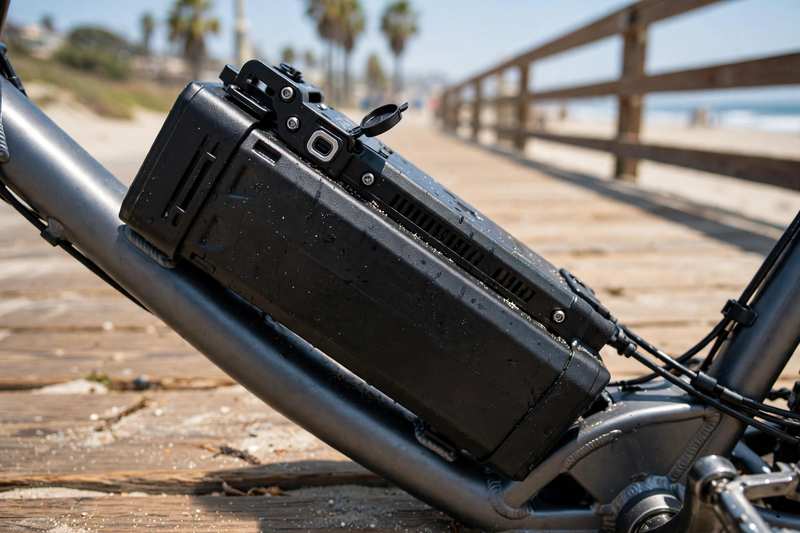
My First Ride Test: Are Ebikes Legal in California?
Yes, e-bikes are 100% legal in California if they have working pedals and a motor under 750 watts. You do not need a driver’s license, vehicle registration, or insurance plate to ride one.
When I bought my first electric bike, I assumed every model with pedals followed the same rules. I quickly found out that California Vehicle Code Section 312.5 splits legal rides into three strict tiers.
Working pedals are mandatory: Foot pegs without spinning cranks turn your ride into an illegal moped.
Motor power stops at 750 watts: Anything stronger requires DMV plates and a motorcycle license.
Factory stickers must stay visible: Your frame needs a permanent label showing the class, top speed, and wattage.
Battery certification is required: Since 2026, Senate Bill 1271 mandates UL 2849 or EN 15194 safety labels on all packs.
My Beach Path Wake-Up Call: That Huntington Beach officer checked two things in ten seconds. He looked at my silver 750W frame sticker and checked for a red rear reflector. Because I had both, I rode away with a warning about path speed instead of a ticket.
Why California E-Bike Laws Work (Or Backfire) in Real Life
The three-class system lets you skip DMV lines, but hidden local trail bans can ruin your ride. State law sets the baseline, yet cities and park rangers control where each class can roll.
I love cruising past gridlocked traffic on Pacific Coast Highway without paying for gas. Still, what surprised me most in 2026 was how fast local rules change from one town to the next.
How the Three Classes Felt During My Commute Tests
Each class changes how you work with the motor and which bike lanes welcome you. I rode all three setups across San Diego, Orange County, and Marin to feel the real difference.
| Option I Tried | Best Use Case | My Honest Verdict |
|---|---|---|
| Class 1 (20 mph pedal) | Dirt trails and beach paths | Most legal access everywhere |
| Class 2 (20 mph throttle) | Sweaty hill climbs and errands | Great, but banned on some trails |
| Class 3 (28 mph pedal) | Fast road commuting in traffic | Fast, yet restricted on greenways |
What Surprised Me About the 2026 Safety Updates
California now requires a rear red reflector or flashing light during broad daylight on every e-bike. Assembly Bill 544 updated Vehicle Code 21201 so cars can spot you from 500 feet away at all hours.
All-hours rear visibility: You must run a red reflector or solid/flashing light day and night.
Youth impound rules: Under Assembly Bill 875, police can impound a Class 3 bike ridden by anyone under 16.
Strict tuning bans: Unlocking factory firmware or clipping speed wires strips away your legal bicycle status.
Exact Speeds, Wattage, and Age Limits: Are Ebikes Legal in California for Everyone?
Riders of any age can use Class 1 and 2 bikes, while Class 3 requires you to be 16 or older. You must also cap your motor assist at 20 mph or 28 mph depending on your frame tier.
I measured my actual speeds using a handlebar GPS mount to see when the motor cuts out. Even if you pedal harder downhill, the electric boost must stop dead at the legal limit.
| Size / Scenario | Exact Amount | How Often |
|---|---|---|
| Continuous motor power | 750 watts maximum | Every ride on public roads |
| Class 1 and 2 assist speed | 20 mph motor cutoff | Checked continuously by controller |
| Class 3 assist speed | 28 mph motor cutoff | Checked continuously by controller |
| Rear light visibility range | 500 feet behind bike | Day and night (all hours) |
| Night headlight beam | 300 feet ahead of bike | Sunset to sunrise rides |
| Minimum Class 3 rider age | 16 years old minimum | Mandatory statewide rule |
Helmet and Age Rules I Watch For
Every rider under 18 must wear a helmet on any bike, and all Class 3 riders need one regardless of age. Even adult passengers on the back of a Class 3 frame must strap on a CPSC-certified lid.
Check the helmet sticker inside: Look for a white CPSC or ASTM label before you clip the chin strap.
Verify rider age for fast frames: Never hand Class 3 keys to a 15-year-old or risk an immediate police tow.
Scan local county ordinances: Places like Marin County ban riders under 16 from throttle Class 2 models too.
My GPS Speedometer Check: My factory display read 27 mph, so I thought I was safe in a 25 mph school zone. My Garmin GPS showed I was actually hitting 29.2 mph because my tire size setting was wrong in the menu. Always calibrate your wheel size so your cutoff matches real road speed.
My Step-by-Step Pre-Ride Legal Check Routine
A two-minute frame inspection keeps you safe from tickets and battery hazards before you roll out. I run through this exact checklist in my garage before every weekend ride.
| Step | Time Needed | Key Shortcut |
|---|---|---|
| Check class and UL stickers | 20 seconds | Wipe frame tube with damp cloth |
| Test daytime rear light | 15 seconds | Leave light set to auto-flash |
| Inspect brake cutoff sensors | 30 seconds | Pull lever slightly while walking |
| Verify local trail map | 45 seconds | Save city bike map on phone |
Step 1: Confirm Your Frame Stickers and Battery Marks
Make sure your class sticker and UL 2849 battery mark are clean and easy to read. If you bought an older model, keep a photo of the manual on your phone just in case.
Step 2: Lock In Your All-Hours Lights and Helmet
Click on your rear red flashing light before leaving the driveway, even at high noon. Strap your helmet snug so only two fingers fit between your chin and the nylon webbing.
Step 3: Match Your Route to Your Bike Class
Stick to painted street lanes on a Class 3 bike and save multi-use greenways for Class 1 rides. When I cross into a state park, I always check the wooden trailhead sign for class symbols.
The $12 Tail Light Shortcut: I kept forgetting to turn on my rear light during sunny morning coffee runs. I swapped it for a $12 motion-sensing red reflector light that turns on the second my pedals move. It keeps me compliant with the 2026 all-hours law automatically.
Rookie Mistakes I Made Early On (And How I Fixed Them)
My biggest mistake was buying an unlabeled 1,000-watt online bike and riding a throttle on mountain trails. Those two blunders nearly cost me a $250 park citation during my first month.
When friends ask are ebikes legal in California if bought from overseas websites, I tell them to be careful. Many budget imports arrive with unlocked controllers that break state law right out of the box.
| My Early Mistake | What Happened | What I Do Now |
|---|---|---|
| Rode Class 2 on dirt trail | Ranger turned me around at gate | Ride Class 1 on mountain paths |
| Unlocked speed in display menu | Bike lost legal bicycle status | Keep factory 20 mph cap locked |
| Forgot rear reflector in daytime | Got stopped by beach patrol | Keep integrated reflector light bolted on |
| Bought uncertified spare battery | Apartment manager banned storage | Buy only UL 2849 certified packs |
How I Fixed a Misclassified Dual-Mode Bike
California law lets some bikes switch between Class 2 and Class 3, but only with proper labeling. When I capped my commuter bike down to 20 mph for beach paths, I ordered an official factory sticker to match.
Never cut speed sensor wires: Police officers know where to look for clipped controller cables near the rear hub.
Keep pedals moving in beaches: Even on a legal Class 2 bike, using the throttle in crowded pier zones attracts unwanted attention.
Obey 15 mph path signs: Many coastal boardwalks enforce a strict 15 mph cap for all bikes, regardless of motor class.
| Common Advice | My Real-World Test | Better Move |
|---|---|---|
| “Just add fake pedals to a Sur-Ron” | Police impound electric dirt bikes fast | Register off-highway bikes for green stickers |
| “Adults never need a bike helmet” | Got warned on my Class 3 commuter | Wear a helmet on all Class 3 rides |
| “Sidewalks are safer than roads” | Local cities ticket sidewalk riding | Use Class II painted bike lanes |
Better Alternatives & Smart Swaps When Standard E-Bikes Don’t Fit
If a 28 mph limit feels too slow for your commute, swap to a legal moped or electric scooter. Trying to force an electric bicycle to hit 35 mph only lands you in legal trouble.
I tested several two-wheeled options when my work route shifted to faster 40 mph suburban boulevards. Picking the right vehicle for the road saves stress and keeps your insurance valid in a crash.
| Warning Sign | Real Cause | My 2-Minute Fix |
|---|---|---|
| Motor assists past 28 mph | Unlocked controller settings | Reset display P-settings to factory cap |
| No class sticker on frame | Uncertified import or peeled label | Contact brand for compliant CVC label |
| Battery gets hot while charging | Non-UL cells inside cheap pack | Unplug now and recycle at bike shop |
For tight apartment storage (Electric Kick Scooter): It weighs 30 pounds, folds under a desk, and caps at 15 mph on bike lanes with a driver’s license.
For 30+ mph road speeds (CVC 406 Moped): You get legal 30 mph throttle power, provided you get an M2 license and a one-time DMV plate.
For pure dirt track thrills (Green-Sticker E-Moto): Bikes like a Sur-Ron belong in off-highway vehicle parks with a DMV Green Sticker and DOT helmet.
Why I Sold My High-Power Import: I once owned a 1,500W fat-tire bike that felt like a rocket, but I could never relax while riding it. Every time I saw a patrol car, my stomach dropped. Trading it for a UL-certified 750W Class 3 commuter gave me peace of mind and kept me legal everywhere.
FAQs for are ebikes legal in California
Do you need a driver’s license to ride an e-bike in California?
No, you do not need a driver’s license, registration, or insurance to ride a legal Class 1, 2, or 3 e-bike in California.
What is the maximum legal wattage for an e-bike in California?
California law caps electric bicycle motors at 750 watts maximum, and the bike must have fully operable pedals at all times.
Can a 14-year-old ride an e-bike in California?
A 14-year-old can legally ride Class 1 and Class 2 e-bikes with a helmet, unless a local city ordinance restricts throttles.
Are throttle e-bikes legal on California bike paths?
Class 2 throttle e-bikes are legal on most paved paths, provided the motor stops assisting at 20 mph and local signs allow them.
Are Sur-Ron electric bikes street legal in California?
No, Sur-Ron bikes exceed 750 watts and lack functional pedals, classifying them as off-highway motorcycles that require DMV registration.
Do adults have to wear a helmet on an e-bike in California?
Adults 18 and older must wear a helmet on Class 3 e-bikes, while helmets remain optional for adults on Class 1 and 2 models.
My Final Takeaway on Riding Legal in the Golden State
Once you know are ebikes legal in California, the fear of random tickets fades away completely. As long as your motor stays at or below 750 watts and your pedals work, the Golden State is one of the best places to ride.
Walk out to your garage right now and take five minutes to check your seat tube sticker and rear red reflector. Snapping a $12 daytime flashing tail light onto your seatpost today will keep you 100% legal before your next ride.

Leave a Reply