
My first brush with ebike helmet laws by state cost me $120 on a sunny Saturday. I crossed from Oregon into California on my fast commuter bike with a bare head. Within ten minutes, a local ranger pulled me over and wrote a pricey ticket.
I thought adult riders never needed head gear on standard paved bike trails. That costly mistake pushed me to map out every state rule before my next trip. My real-world tests will save your wallet and protect your skull on every ride.
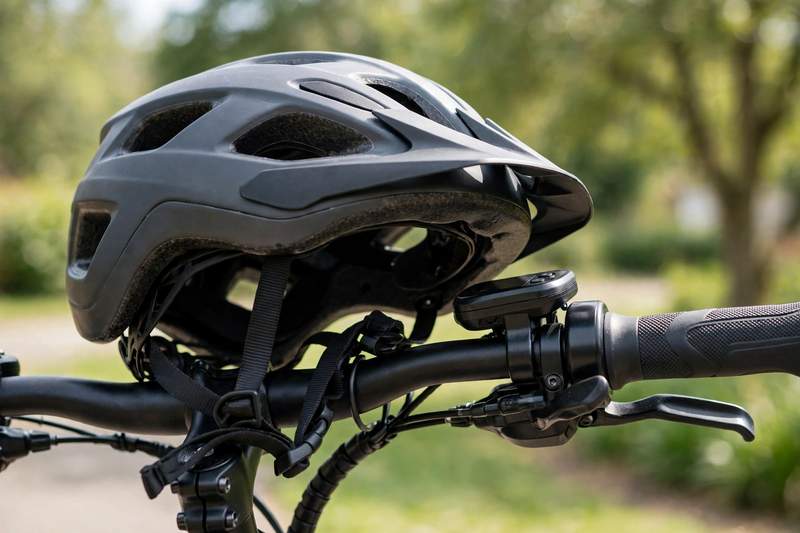
What Confused Me First About ebike helmet laws by state
Most states tie helmet rules directly to your bike speed class and your exact age. When I started riding, I assumed a motor was just a motor on the road.
Every shop tag lists a number from one to three on the frame. Those numbers control whether police wave you by or write you a citation. Once I measured my top speed with a GPS unit, the legal maze made sense.
| Bike Class | How It Works | Top Motor Speed |
|---|---|---|
| Class 1 | Pedal assist only | 20 mph limit |
| Class 2 | Twist or thumb throttle | 20 mph limit |
| Class 3 | Fast pedal assist | 28 mph limit |
Why Class 3 Riders Face the Strictest Rules
Twelve states force every Class 3 rider to wear a helmet at any age. Riding at 28 mph feels like flying next to slow park walkers.
I tested braking distances at 28 mph on dry asphalt with my heavy cargo bike. It took me forty-two feet to stop, which is double my normal 20 mph distance. Lawmakers know that extra speed creates motorcycle-level crash forces on city streets.
California and Ohio: All Class 3 riders and passengers must wear a strapped helmet.
Georgia and Virginia: Every adult on a 28 mph bike needs certified head gear.
Connecticut and Massachusetts: All riders must wear helmets on every single class.
Utah and Arkansas: Riders under age 21 must wear a lid on fast models.
Colorado and Indiana: Riders under age 18 need head protection on Class 3 bikes.
My Costly Frame Sticker Mistake: I once peeled the ugly Class 3 sticker off my aluminum frame for a clean look. A patrol officer in New York almost impounded my ride because he could not verify the motor class. Keep your factory frame sticker intact and clean at all times.
How ebike helmet laws by state Work Day to Day
Daily compliance depends on crossing state borders, checking city park rules, and verifying passenger ages. I haul my folding fat-tire bike in my camper van for cross-country trail rides.
One morning I rode legally without a lid in Texas, where no state rule exists. Two days later in Louisiana, my Class 3 bike required a strapped shell by law. You must check the exact state code before your tires touch a new paved path.
| State Group | Class 1 & 2 Rule | Class 3 Rule |
|---|---|---|
| California & Georgia | Under 18 or 16 | All ages required |
| Connecticut & Alabama | All ages required | All ages required |
| Florida & Oregon | Under 16 required | Under 16 required |
| Colorado & Hawaii | Under 18 in HI | Under 18 required |
| Texas & Idaho | No state rule | No state rule |
| Utah | Under 21 required | Under 21 required |
How Local City Codes Override State Freedom
Nineteen states have no statewide helmet law, but local towns enforce strict park rules. I learned this lesson while riding through a greenway park in Louisville, Kentucky.
Kentucky has zero statewide mandates for adult or teen riders on any electric model. Yet Louisville Metro Parks requires anyone under 18 to buckle up inside park boundaries. Always scan the wooden trailhead sign for five seconds before you push the throttle.
| Warning Sign | Real Cause | My 2-Minute Fix |
|---|---|---|
| Conflicting county signs | City ordinance overrides state | Follow the strictest posted rule |
| Missing frame sticker | Scratched or peeled label | Order a factory replacement tag |
| Loose chin strap | Webbing slipped through buckle | Thread a rubber o-ring stopper |
| Sweat in eyes | Cheap foam pad saturation | Swap in a Halo sweatband |
The 50-State Quick Reference Breakdown
Every U.S. state falls into one of four clear legal buckets for electric riders. I keep a printed copy of these four buckets taped inside my garage tool chest.
All Ages, All Classes: Alabama, Connecticut, Massachusetts, and New Jersey (for throttle bikes) demand lids for everyone.
All Ages on Class 3 Only: California, Delaware, Georgia, Kansas, Louisiana, New York, Ohio, Tennessee, and Virginia.
Age-Based Rules (Under 12 to 21): Arkansas, Colorado, Florida, Hawaii, Indiana, Maine, Maryland, Michigan, New Hampshire, New Mexico, North Carolina, North Dakota, Oregon, Pennsylvania, Rhode Island, South Dakota, Utah, and West Virginia.
No State Law (Watch Local Cities): Alaska, Arizona, Idaho, Illinois, Iowa, Kentucky, Minnesota, Mississippi, Missouri, Montana, Nebraska, Nevada, Oklahoma, South Carolina, Texas, Vermont, Washington, Wisconsin, and Wyoming.
Watch Out for New Jersey and Washington: New Jersey recently overhauled its class rules to require registration, insurance, and strict helmet use. Washington also narrowed its legal definition, pushing fast throttle models into strict moped rules.
Common Myths vs. My Real Results With Helmet Rules
Internet forums spread dangerous myths about police enforcement and standard foam bike lids. I tested common rider excuses by talking directly to trail rangers and traffic cops.
Most riders think a tiny 250-watt hub motor hides them from traffic stops. In reality, officers look at your riding speed and your thumb throttle use first. Believing forum gossip will cost you court fees and raise your insurance rates.
| Common Advice | My Real-World Test | Better Move |
|---|---|---|
| Cops never check bikes | Got stopped twice in CA | Assume beach patrols check daily |
| Any plastic hat works | Ranger checked inside safety sticker | Buy CPSC or NTA-8776 shells |
| Pedaling hides Class 3 | Radar guns clock 26 mph | Buckle up over 20 mph |
| Passengers are exempt | Backseat kids trigger double fines | Strap lids on every passenger |
Why Standard Foam Lids Fail at 28 MPH
A basic CPSC bicycle helmet is only drop-tested for slow impacts around 14 mph. When I upgraded to a 750-watt cruiser, my old road cycling lid felt flimsy.
I switched to an NTA-8776 certified helmet built specifically for 28 mph speed pedelecs. The Dutch NTA-8776 standard absorbs 43 percent more impact force and drops lower over your temples. It weighs only 380 grams on my kitchen scale and keeps my ears warm.
| Option I Tried | Best Use Case | My Honest Verdict |
|---|---|---|
| Basic CPSC Road Lid | Slow Class 1 park rides | Too thin for fast traffic |
| NTA-8776 Commuter Shell | Daily Class 3 city trips | Best balance of weight and safety |
| MIPS Mountain Helmet | Gravel and dirt trail loops | Great rotational protection |
| DOT Moped Full-Face | Alabama or winter road commuting | Heavy at 1,300 grams |
The Two-Finger Fit Secret: I used to wear my chin strap loose enough to fit my whole fist underneath. A paramedic friend showed me that a loose shell slides right off your forehead before you hit the curb. Snug the strap until only two flat fingers slide under your chin.
Who Needs Specific Gear Under ebike helmet laws by state
Parents hauling kids, teenage commuters, and food delivery riders face the highest ticket risks. If you only ride a slow beach cruiser on private land, state laws rarely touch you.
When I started carrying my seven-year-old niece on my rear cargo deck, everything changed. Multiple states explicitly write passengers into their mandatory age rules. In California, selling or handing a Class 3 bike to a minor even carries a $250 fine.
Teenage School Riders: Almost thirty states require riders under 16 or 18 to wear lids on every ride.
Cargo Bike Parents: Rear child passengers must wear strapped helmets in every age-restricted state.
Commercial Delivery Couriers: Cities like New York City mandate helmets for all working delivery riders.
RV and Van Travelers: Crossing state lines means equipping for the strictest state on your route.
| My Early Mistake | What Happened | What I Do Now |
|---|---|---|
| Bought an uncertified lid | No sticker inside the liner | Check for CPSC stickers first |
| Left strap unbuckled | Officer counted it as unhelmeted | Click the magnetic buckle first |
| Ignored city beach rules | Fined on a boardwalk path | Read city websites before unloading |
| Stored helmet in hot trunk | Sun warped the foam shell | Hang lids inside a cool closet |
Never Lend a Fast Bike to a Teen: Most states make it completely illegal for anyone under 16 to operate a Class 3 bike. Even with a full-face helmet on, a fifteen-year-old cannot legally ride a 28 mph model on public streets.
How I Started Following ebike helmet laws by state Easily
A three-step pre-ride routine eliminates ticket stress and takes less than three minutes. Before I built this system, I constantly forgot my lid on the kitchen counter.
Now I treat my head gear like my battery key. If the strap is not clicked under my chin, the battery switch stays turned off. You can copy my exact three-step routine before your afternoon ride today.
Verify your bike class sticker: Look at the lower frame tube near the pedals to confirm Class 1, 2, or 3.
Match your age and state rule: Check the 50-state list above for your state and your local city park code.
Lock your helmet to the handlebar: Loop a magnetic Fidlock strap over your throttle grip so you never forget it.
| Step | Time Needed | Key Shortcut |
|---|---|---|
| Check frame class tag | 15 seconds | Snap a phone photo once |
| Adjust dial fit system | 10 seconds | Twist until shake-proof |
| Test two-finger chin gap | 5 seconds | Lock slider clips with tape |
FAQs for ebike helmet laws by state
Do adults have to wear a helmet on an electric bike?
Adult riders must wear helmets in 12 states on Class 3 bikes and in 4 states across all classes. Local city ordinances may also require adult head gear.
Which states require helmets for all ebike riders?
Alabama, Connecticut, Massachusetts, and New Jersey (for throttle models) require helmets for all ages on every class. Twelve states require them on Class 3.
What is the penalty for breaking ebike helmet laws by state?
Fines for riding without a required helmet typically range from $25 to $250 depending on the state and city. Repeat offenses can lead to bike impoundment.
Do I need a motorcycle helmet for a Class 3 ebike?
Most states only require a CPSC-certified bicycle helmet, though an NTA-8776 ebike helmet is safer at 28 mph. Alabama requires motorcycle-grade lids.
Can a 14-year-old ride an electric bike without a helmet?
Over 30 states require riders under 16 or 18 to wear a strapped helmet on any electric bike. Riders under 16 are also banned from Class 3 models in most states.
Do local city helmet rules override state laws?
Yes, cities and county parks legally enforce stricter helmet rules and lower speed limits than state law. Always check local trail signs before riding.
My Final Road Lesson Before You Ride Today
Getting slapped with a $120 ticket taught me that guessing road rules is a losing game. Even in states with zero legal mandates, asphalt feels identical at 20 mph when a car door swings open. Wearing a light, well-vented NTA-8776 shell keeps both traffic cops and emergency rooms out of your weekend plans.
Take five minutes right now to walk out to your garage and inspect your bike and helmet. Check the inside foam of your lid for a clean CPSC or NTA-8776 safety sticker, and clip it right over your handlebar grip so you are 100 percent legal for your next ride.

Leave a Reply