
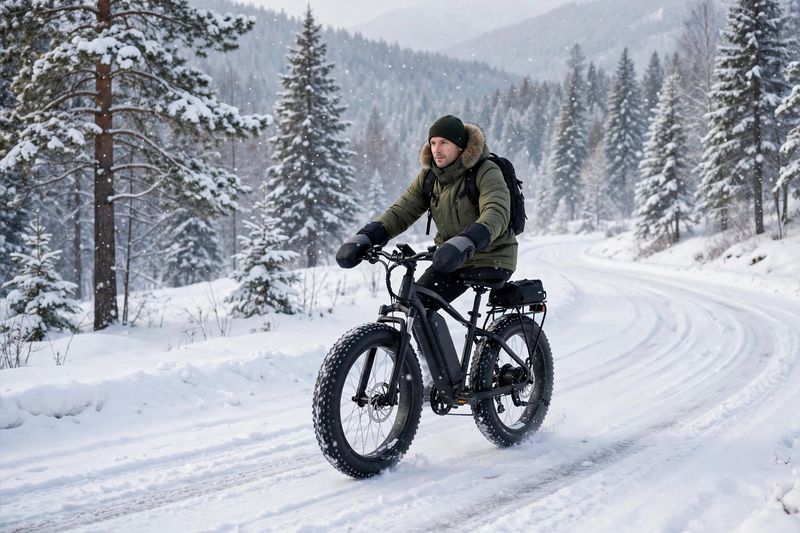
My first January commute ended in a slushy ditch two blocks from home. Figuring out how to ride an ebike in winter and snow took bruised hips. I grabbed my front brake on black ice and slid off the road.
Since that wipeout, I have logged over 1,400 winter miles in ten-degree weather. I tested tire pressures, thermal wraps, and pedal assist settings on icy streets. Here is my exact blueprint so you stay upright and warm all season.
What Most Guides Leave Out About How to Ride an Ebike in Winter and Snow
Cold weather drains battery range by thirty percent and makes rubber tires stiff. Heavy frames and instant motor power spin your rear wheel out in seconds.
Sudden motor surge: High pedal assist (motor power that boosts pedaling) spins tires on slick snow.
Frozen tire rubber: Summer tires turn hard as plastic below thirty-two degrees Fahrenheit.
Cold voltage sag: Freezing battery cells drop power fast and cut your normal range down.
My Biggest Aha Moment: Dropping my pedal assist to level one stopped my rear wheel from spinning on ice.
| My Early Mistake | What Happened | What I Do Now |
|---|---|---|
| Kept tires at 30 PSI | Slid out on packed snow | Drop pressure to 15 PSI |
| Left battery in cold garage | Lost half my range fast | Store pack indoors at 68°F |
| Grabbed front brake hard | Front wheel locked and washed | Feather rear brake gently first |
Tools and Gear I Actually Use for Freezing Commutes
You only need bar mitts, low tire pressure, and wet lube for snow. I wasted two hundred dollars on heated gadgets that died in twenty minutes.
Neoprene bar mitts: Thick handlebar covers block freezing wind so you can wear thin gloves.
Carbide studded tires: Metal grip pins bite into glare ice and keep your wheels upright.
Wet chain lube: Heavy oil stays on your chain through wet slush and salt spray.
| Option I Tried | Best Use Case | My Honest Verdict |
|---|---|---|
| Neoprene bar mitts | Blocking wind below 25°F | Best thirty dollars I spent |
| Studded fat tires | Glare ice and hard ruts | Lifesaver on frozen city roads |
| USB heated insoles | Long rides in deep cold | Skip because wires snap fast |
Gear Shortcut: Buy bar mitts first because warm fingers give you safe brake control in snow.
My Step-by-Step Workflow for How to Ride an Ebike in Winter and Snow
A safe winter ride takes ten minutes of indoor prep and smooth braking. Follow my three-stage routine to protect your bike and stay upright in snow.
Step 1: Prepping My Tires and Battery Indoors
Always warm your battery indoors and lower your tire pressure before stepping outside.
Charge your battery indoors: Wait until the pack reaches room temperature before plugging it in.
Bleed your tire air: Let air out with a gauge to widen your rubber footprint.
Drop your saddle height: Lower your seat one inch so your boots touch the ground flat.
| Tire or Part | Exact Amount | How Often |
|---|---|---|
| 4-inch fat tires | 10 to 15 PSI | Before every snowy ride |
| 2-inch commuter tires | 25 to 30 PSI | Check twice a week |
| Indoor charging temp | 60°F to 70°F | Every single charge cycle |
Step 2: How to Ride an Ebike in Winter and Snow on Slick Streets
Start in the lowest power mode and use your rear brake softly. Knowing how to ride an ebike in winter and snow means avoiding sudden moves.
Set pedal assist to level one: Low power stops the motor from jerking your wheel on ice.
Skip the thumb throttle: Pedal smoothly from a dead stop so your tire hooks up cleanly.
Brake before you turn: Slow down in a straight line using mostly rear brake power.
Safety Warning: Never grab your front brake while turning on ice, or your wheel will slide.
Step 3: My Post-Ride Slush and Salt Cleanup
Wipe off wet road salt within five minutes of ending your winter commute.
Pull the battery first: Bring your pack inside right away so cold air cannot drain it.
Brush off packed snow: Knock slush off fenders and the derailleur (rear gear shifter) with a brush.
Wipe and lube the chain: Dry the chain and brake rotors (metal brake discs), then add wet oil.
Shortcuts That Cut My Winter Prep Time in Half
Staging your gear by the door cuts morning prep down to three minutes.
Use a preset deflator: Screw on a brass valve cap that stops at fifteen PSI automatically.
Leave bar mitts attached: Keep mitts strapped to your bars all winter to save dressing time.
Park on a boot tray: Set your rear tire on rubber to catch melting garage slush.
| Step | Time Needed | Key Shortcut |
|---|---|---|
| Air down both tires | 45 seconds | Use preset brass deflator caps |
| Mount warm battery | 15 seconds | Keep keys clipped to pack |
| Post-ride salt wipe | 60 seconds | Hang dry towel by door |
Time Saver: Keep an old dish brush by your door to knock slush off before it freezes.
Where Things Go Wrong Mid-Ride and My Fast Fixes
Frozen brake cables and sudden battery drops are the top mid-ride winter failures. When you know how to ride an ebike in winter and snow, you spot trouble fast.
Squealing disc brakes: Melting snow glazes the brake pads and kills your stopping power.
Skipping rear gears: Ice builds up on the rear gear cluster and makes chains jump.
Fading display screen: Extreme windchill slows down the liquid crystal screen until numbers fade out.
| Warning Sign | Real Cause | My 2-Minute Fix |
|---|---|---|
| Brakes squeal and slip | Ice glaze on rotors | Drag brakes lightly for 50 feet |
| Chain skips on gears | Slush frozen on cogs | Shift to middle gear and stay |
| Battery bars drop fast | Cold voltage sag | Drop assist to level 1 |
Emergency Tip: Squeeze either brake lever to cut motor power instantly if your throttle ever freezes open.
My Weekly Maintenance Habit for Rust-Free Winter Riding
A ten-minute Sunday check keeps road salt from ruining your chain and wiring. Mastering how to ride an ebike in winter and snow means stopping rust early.
Grease battery pins: Dab dielectric grease (waterproof electrical gel) on metal plugs once a month.
Check brake pads: Wet winter grit wears down pads twice as fast as dry summer roads.
Oil cable tubes: Put two drops of light oil into brake cable housings every two weeks.
| Common Advice | My Real-World Test | Better Move |
|---|---|---|
| Wash with hot water | Melts grease and cracks seals | Wipe with damp cold rag |
| Spray WD-40 on chain | Strips oil and attracts grit | Use thick wet bike lube |
| Drain battery to zero | Damages cold lithium cells | Recharge at 30 percent left |
FAQs for How to Ride an Ebike in Winter and Snow
Yes, you can ride in snow by dropping your tire pressure to 15 PSI. Use level 1 pedal assist and studded tires to grip slick road ice safely.
Riding below 14 degrees Fahrenheit can cut your battery range in half. Always store and charge your pack indoors between 60 and 70 degrees.
No, you do not need fat tires for plowed winter city streets. Standard 2-inch tires with metal studs grip hard snow and black ice better.
Sealed hub motors handle snow well, but road salt quickly rusts bare metal. Wipe off salty slush after every ride and grease your plugs.
Run 10 to 15 PSI in fat tires and 25 PSI in commuter tires. Lower air pressure widens your rubber tire footprint for extra grip on snow.
My Final Winter Riding Takeaway and Your 5-Minute Starter Step
Lowering tire pressure and easing off the throttle stops most winter slips. Now you know how to ride an ebike in winter and snow safely.
Grab a tire gauge and an Allen wrench right now. Drop your seat one inch and let five PSI out of both tires.

Leave a Reply