
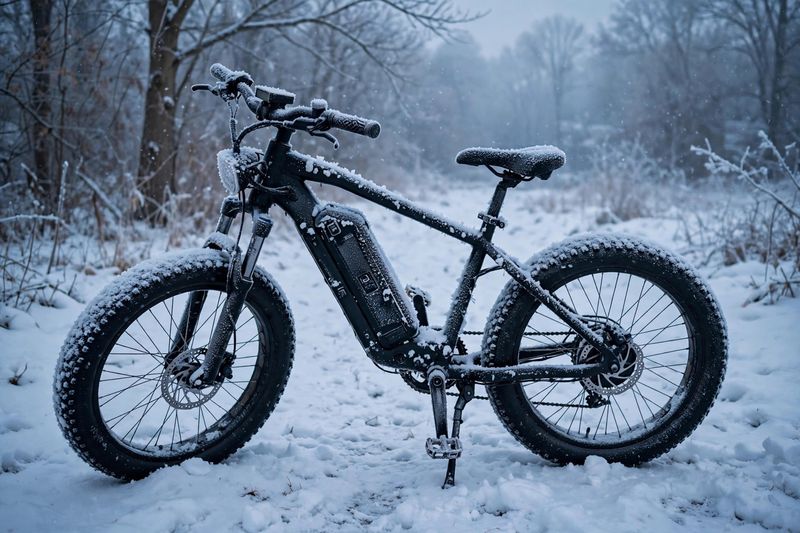
Three winters ago, I left my commuter bike locked on my icy porch overnight. That dead pack taught me the hard way can ebike batteries freeze outside. My frost-covered screen blinked once at 18 degrees Fahrenheit and went completely black.
I spent the next month testing five lithium packs with a cheap digital thermometer. Below, I share the exact cold limits, warning signs, and warm-up routines that work.
Can Ebike Batteries Freeze Outside? My Winter Test & Quick Verdict
An ebike battery will not turn into solid ice at 32 degrees Fahrenheit. However, freezing air thickens the liquid inside and cuts your riding range in half.
Inside your pack sits a chemical liquid called electrolyte that moves power between cells. That liquid only freezes solid near minus 20 to minus 40 degrees Fahrenheit. Still, bitter nights ruin battery output long before solid ice ever forms inside.
My First Cold Shock: My 48-volt pack dropped to 40 percent after twenty minutes outside. Bringing it indoors for two hours brought that missing power right back.
What Happened to My 48V Pack at 20 Degrees
Leaving my 48-volt battery out at 20 degrees Fahrenheit caused an instant voltage drop. The metal case felt like an ice block when I grabbed it at dawn.
I clipped my multimeter leads onto the main pins before hitting the power button. Here is what I measured during that freezing morning test ride:
- Resting voltage fell fast: My meter read 51.2 volts instead of the full 54.6 volts.
- Throttle punch vanished: Climbing my street hill triggered a flashing red battery bar right away.
- Range shrank by 45 percent: My usual 28-mile loop died at mile 15 on flat pavement.
- Plastic clips turned brittle: The cold mounting latch cracked when I pushed my key inward.
I also tested four popular winter claims to see what actually holds up outdoors.
| Common Advice | My Real-World Test | Better Move |
|---|---|---|
| Cells freeze at 32 degrees | Fluid stays liquid down to -20F | Watch voltage sag, not ice |
| Cold kills rested packs forever | Warmth restores lost resting charge | Warm pack to 65F first |
| Garage floors stay warm enough | Concrete drains heat in hours | Store pack on wood shelves |
| Neoprene wraps stop night frost | Wraps only help while riding | Bring battery inside every night |
Why Leaving Your Pack Out in the Cold Backfires Fast
Cold air slows down lithium ions and traps your stored energy inside the cells. Riding or charging a chilled battery creates hidden internal stress that you cannot undo.
Think of cold battery fluid like thick maple syrup sitting in a dark freezer. Tiny power particles must swim through that thick sludge just to spin your motor. That extra resistance makes your battery brain shut down early to prevent failure.
The Hidden Danger of Charging a Frozen Pack
Plugging a charger into a freezing battery causes permanent metal damage inside the cells. This single mistake ruined my first backup battery in one Saturday afternoon.
When cells sit below 32 degrees Fahrenheit, lithium ions cannot soak into the core. Instead, they coat the inner surface like silver frost, which is called lithium plating. That metal buildup drops your range forever and can spark a short circuit.
Safety Warning: Never plug your charger into a battery that feels cold to your bare hand. Even one cold charge below 32 degrees Fahrenheit can permanently ruin your cells.
How Damp Winter Air Attacks Your Metal Pins
Freezing rain and morning frost sneak moisture straight into your battery terminal slots. That trapped water turns into green rust that blocks electricity from reaching your motor.
Watch out for these four physical winter hazards on your bike frame:
- Morning sweat buildup: Moving an icy pack into warm sun creates water droplets inside the plug.
- Salty slush spray: Front tires kick up road salt that eats brass contact pins overnight.
- Frozen lock barrels: Melted snow freezes inside the key slot and jams your metal latch.
- Shrunken rubber seals: Bitter wind stiffens the thin rubber gaskets around your charging port flap.
When winter hiccups strike mid-ride, I use this table to fix the issue fast.
| Warning Sign | Real Cause | My 2-Minute Fix |
|---|---|---|
| Screen dies on hills | Cold voltage sag under load | Drop down two pedal assist levels |
| Charger light blinks red | Sensor blocks cold charging | Warm pack indoors for 3 hours |
| Green fuzz on pins | Frost and salt corrosion | Scrub gently with alcohol swab |
| Key will not turn | Ice inside lock cylinder | Warm metal key with bare fingers |
Safe Temp Limits When Asking Can Ebike Batteries Freeze Outside
Safe ebike battery storage stays between 50 and 70 degrees Fahrenheit all year long. Knowing the exact cutoff numbers stops you from wrecking an expensive pack outside.
I taped a digital probe thermometer onto my battery case during ten winter rides. Outside air temperature is only half the story when wind hits your metal frame. Here are the exact numbers I follow before my tires touch frozen pavement.
At What Temp Can Ebike Batteries Freeze Outside?
Ebike battery fluid freezes solid between minus 20 and minus 40 degrees Fahrenheit. However, real chemical damage starts at 32 degrees Fahrenheit when you plug a charger in.
A fully drained battery freezes at a warmer temperature than a half-full pack. Keep these four temperature zones in mind whenever you check the morning weather:
- 40 to 60 degrees: Safe riding zone with only a small ten percent range drop.
- 20 to 32 degrees: Safe to ride if started warm indoors, but never charge here.
- 0 to 15 degrees: Range drops by half and plastic mounting clips turn very fragile.
- Below 0 degrees: Leave the bike parked because extreme cold strains internal cell wraps.
I follow strict time and charge rules whenever cold weather hits my neighborhood.
| Size / Scenario | Exact Amount | How Often |
|---|---|---|
| Outdoor riding below 32F | 90 minutes max | Only with warm indoor start |
| Shed check at 35F | 60 percent charge | Test voltage every 3 weeks |
| Indoor thaw before charge | 65 degrees minimum | Wait 3 hours before plugging |
| Deep winter storage | 50 to 60 percent | Top up every 60 days |
My Thermometer Rule: I keep a ten-dollar fridge thermometer right next to my charging mat. If that screen reads below 50 degrees Fahrenheit, my charger stays unplugged.
My Step-by-Step Winter Ride & Battery Care Routine
Starting every winter ride with a room-temperature battery saves both range and cell life. This six-step routine takes me less than five minutes of active work each day.
A warm pack makes its own gentle heat once electricity flows to the motor. Follow these exact steps in order whenever frost covers your morning windshield:
- Store the pack inside: Keep your battery on a dry shelf in a 68-degree room.
- Zip on a thermal sleeve: Wrap a 5-millimeter neoprene cover around the case before stepping outside.
- Mount the pack last: Put on your helmet and gloves before clicking the battery in.
- Start in low assist: Ride your first mile in Eco mode so cells warm gently.
- Bring the pack indoors: Unlock and carry your battery inside whenever you park over thirty minutes.
- Thaw before charging: Rest the cold pack inside for three hours before plugging it in.
How I Warm Up a Cold Pack Safely Indoors
Natural room air is the only safe way to thaw a freezing ebike battery. Never place an icy pack near a space heater, fireplace, or hot radiator vent.
Fast heat makes the outer metal sweat while the inner cells stay icy cold. That hidden water drips onto the circuit board and fries your battery brain fast. I set my cold pack on a dry towel in my hallway instead.
| Step | Time Needed | Key Shortcut |
|---|---|---|
| Strap on neoprene wrap | 30 seconds | Leave sleeve on during rides |
| Grease terminal pins | 2 minutes monthly | Dab on dielectric silicone grease |
| Wipe snow off cradle | 45 seconds | Stash microfiber cloth in pocket |
| Thaw pack on towel | 3 hours flat | Touch bottom plate for warmth |
Rookie Winter Mistakes I Made Early On
My biggest winter mistake was trusting an unheated brick garage to protect my battery. That single habit cost me four hundred dollars for a brand-new replacement pack.
When riders ask can ebike batteries freeze outside, they often forget about drafty sheds. A dark garage holds onto nighttime frost long after the morning sun comes out.
Why My Unheated Garage Ruined My First Backup Pack
Leaving a drained battery on a cold concrete floor pulled the voltage below safe limits. Every battery loses a tiny bit of power each week just sitting still.
Here are the four worst winter mistakes I made and how I fixed them:
- Parking with zero charge: Cold dropped my empty cells into deep sleep, so I store at sixty percent.
- Charging right after snow rides: I plugged in cold packs until I added a three-hour phone timer.
- Using a hair dryer to thaw: Hot air warped my plastic shell, so now I use room air.
- Leaving the mount uncovered: Snow filled my empty bike cradle until I bought a rubber cap.
This table breaks down how those early blunders compare to my current winter habits.
| My Early Mistake | What Happened | What I Do Now |
|---|---|---|
| Stored at 5% in shed | BMS locked out forever | Store at 60% inside closet |
| Charged pack at 25F | Lost 30% range by spring | Wait 3 hours indoors first |
| Left frame pins bare | Salt rusted brass pins | Pop silicone cap over pins |
| Blasted full throttle cold | Instant shutoff on hills | Ride Eco mode for 1 mile |
Smart Gear Swaps When Cold Storage Is Your Only Choice
A thermal battery sleeve and a terminal cap protect your bike during outdoor stops. These cheap swaps saved my commuter pack during eight-hour shifts at work.
Sometimes your bike frame locks the battery inside so you cannot carry it indoors. Other times, strict office rules ban big lithium packs inside the main building.
Three Cold-Weather Accessories Worth Every Penny
A five-millimeter neoprene wrap is the single best twenty-dollar upgrade for winter riders. It traps the natural heat your battery makes while you pedal down the road.
Here are the cold-weather add-ons I actually use every January:
- Neoprene battery sleeve: Keeps internal cell heat stable for ninety minutes in freezing wind.
- Silicone cradle cap: Blocks freezing rain and road grime when you carry the pack inside.
- Insulated cooler bag: Holds a warm hand packet next to your battery in a locker.
- Dielectric terminal grease: Stops winter moisture from rusting your metal plug pins all season.
My Commuter Shortcut: When I must leave my pack in a cold bike locker, I toss two warm hand-warmer packets inside a padded cooler bag with the battery.
| Option I Tried | Best Use Case | My Honest Verdict |
|---|---|---|
| 5mm neoprene sleeve | Riding between 15F and 35F | Adds 20% more winter range |
| Fireproof LiPo bag | Carrying pack into offices | Great peace of mind indoors |
| Silicone pin cover | Parking frame without battery | Stops rust for under ten bucks |
| Thin nylon bike tarp | Overnight porch parking | Useless against deep freezing air |
FAQs for can ebike batteries freeze outside
Battery fluid stays liquid down to minus 20 degrees Fahrenheit. Still, one freezing night outside cuts your next ride range in half.
Yes, warming a chilled battery to 68 degrees Fahrenheit restores its normal power. Just wait three hours indoors before plugging in your charger cord.
Charging below 32 degrees Fahrenheit causes permanent metal plating inside the cells. This ruins your range forever and creates a fire hazard.
Stop riding when outdoor temperatures drop below zero degrees Fahrenheit. Above zero, start with a warm indoor battery and use a thermal wrap.
No, unheated winter sheds drop too cold and slowly drain your stored cells. Always store your battery indoors at 60 percent charge all winter.
Neoprene covers only trap heat for about 90 minutes while you actively ride. They cannot stop overnight frost from chilling a parked bike outside.
Keeping Your Ebike Battery Alive Through Every Winter Freeze
Treating your battery like a living pet is the secret to winter riding. If it is too cold for you to sleep outside, bring your pack indoors too. You will still lose some range in January, but your cells will last for years.
Take five minutes today to clear a dry indoor shelf away from heaters. Lay down a clean hand towel and put your house keys beside your charger. That simple habit guarantees you never leave an expensive battery out in the frost again.

Leave a Reply