
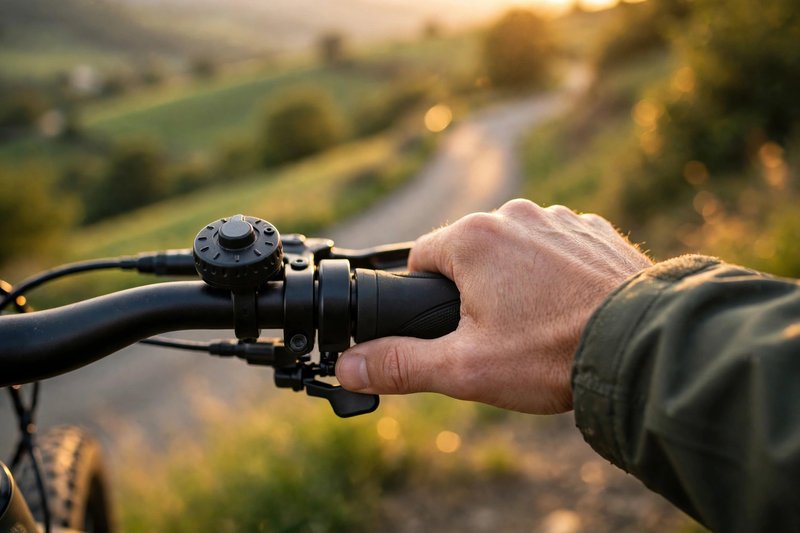
My legs burned on a steep hill during my first summer bike ride. Picking a Pedal assist vs throttle ebike confused me for weeks before that day. I bought a dual-mode bike to test both systems on real roads.
Over six months, I rode 500 miles in wind, rain, and town traffic. I tracked every watt and mile with a small meter on my bars. Here is what I learned from my early mistakes and daily logs.
Why a Pedal Assist vs Throttle Ebike Confused Me on Day One
Pedal assist boosts your foot push, while a throttle runs by hand alone. I used to think both modes pulled the same battery juice.
My test bike had a 500-watt rear hub motor and a 48-volt pack. On my first ride, I turned the cranks and felt the motor kick in. Next, I pressed the thumb lever, and the bike moved without foot spin:
- Leg work changes: Pedal assist needs your feet to turn the cranks first.
- Hand control rules: A throttle acts like a gas grip on a scooter.
- Start speed differs: A thumb lever launches you fast from a red light.
Four Drive Setups I Tested on My Commute
Bikes use two types of foot sensors and two styles of hand throttles. I rode all four setups for two weeks to test them in traffic.
| Option I Tried | Best Use Case | My Honest Verdict |
|---|---|---|
| Cadence pedal assist | Flat paved bike paths | Easy leg spin, slight delay |
| Torque pedal assist | Hilly workouts and trails | Feels smooth and very natural |
| Thumb paddle throttle | Busy city stop signs | Quick boost, saves my wrists |
| Half-twist grip throttle | Long flat road cruises | Fun ride, easy to bump |
First-Day Lesson: Never rest your hand on a live twist grip at a crosswalk. I leaned on my bars once, and the bike jumped two feet forward. Always squeeze your brake lever to keep the motor off at stops.
How Each Drive Mode Actually Works in My Daily Tests
Small sensors read your foot push or hand press and send controller power. Once I learned how these parts work, my daily rides felt much smoother.
How Cadence and Torque Sensors Change Your Pedal Push
Cadence sensors read crank spin, while torque sensors measure how hard you push. This small part sits inside your frame near the front chain ring.
My first bike used a cadence ring with twelve small magnets on the crank. Later, I tested a torque sensor bike on a steep ten-percent hill climb. My notebook showed four clear differences on the road:
- Start delay: My cadence ring lagged by half a second on hills.
- Foot feel: The torque sensor gave smooth power when my shoe pressed.
- Ghost spin: In high cadence modes, my feet spun with zero resistance.
- Battery save: My torque bike used 20% less power on my loop.
How Thumb and Twist Throttles Pull Power From Your Pack
A throttle skips your pedals and sends up to 750 watts to the wheel. Inside the lever, a tiny magnet slides past a chip when you press.
I wired a watt meter to my 48-volt pack, which holds 672 watt-hours. Holding the thumb lever on hills dropped my pack voltage by four volts. Here are my real numbers from four rides on the same hilly loop:
| Size / Scenario | Exact Amount | How Often |
|---|---|---|
| Level 1 pedal assist | 120 watts, 48 miles | Every calm flat ride |
| Level 3 mixed riding | 260 watts, 32 miles | Four work trips weekly |
| Level 5 steep hills | 480 watts, 21 miles | Twice on grocery days |
| Full thumb throttle only | 650 watts, 16 miles | Short lazy trips only |
Heat Warning: Full throttle on a steep climb at low speed bakes your motor. My rear hub shell hit 142 degrees Fahrenheit in three minutes in July. Always pedal along on hills to keep your wheel spinning fast and cool.
Common Myths About a Pedal Assist vs Throttle Ebike
Many riders claim throttles ruin workouts and pedal assist always saves battery juice. My road logs proved both claims wrong during my first month of commuting.
Why My Real Range Tests Beat Internet Rumors
Level 5 pedal assist drains your battery almost as fast as a thumb throttle. Tire air at 35 PSI and wind speed matter more than mode labels.
I wore a chest strap on twenty work trips to test the fitness myth. Even with a thumb lever, my heart rate stayed near 118 beats per minute. I tapped the lever at busy lights and pedaled the rest of the route.
| Common Advice | My Real-World Test | Better Move |
|---|---|---|
| Throttles ruin all fitness | I still burned 320 calories | Use throttle only at stops |
| Pedal assist doubles range | Level 5 drained battery fast | Stay in Level 2 mostly |
| Twist grips are safest | I bumped mine walking once | Pick a thumb lever instead |
| Hub motors hate hills | Mine climbed 10% grades fine | Keep speed above 10 mph |
Rookie Errors That Cost Me Range and Brake Pads
My biggest mistake was using the motor to fight high gears at stops. Once I fixed my gear shifts, I gained eight extra miles per charge.
| My Early Mistake | What Happened | What I Do Now |
|---|---|---|
| Starting in high gear | Motor lugged and got hot | Shift down before every stop |
| Holding throttle on hills | Controller hit 145 degrees fast | Pedal hard in low gear |
| Leaving power on parked | Friend bumped the twist grip | Turn display off right away |
| Riding on soft tires | Lost six miles of range | Pump tires to 35 PSI |
My Stop Sign Trick: Skip shifting down five gears at every brief stop sign. Tap your thumb lever for three seconds to reach six miles per hour. Once the wheels roll, let go and ride in Level 2 pedal assist.
Who Needs Each Setup and When to Skip One
Buy a dual-mode bike for hilly errands, or pick pedal assist for dirt trails. Choosing the wrong bike class can get you kicked off local park paths.
Choosing a Pedal Assist vs Throttle Ebike for Your Route
Pick a pedal assist vs throttle ebike based on knee pain, hills, and trail laws. Class 1 and Class 3 bikes skip throttles to stay legal on park paths:
- Bad knees: Get a throttle to cross wide streets without painful joint strain.
- Heavy cargo: A thumb lever keeps you steady when starting with full bags.
- Dirt trails: Pick a Class 1 pedal assist bike so rangers welcome you.
- Long tours: A torque sensor bike gives 45 miles of smooth road exercise.
Trail Rule Check: Park rangers rarely check your handlebar wires on busy weekend trails. They look straight at the Class 1 or Class 2 sticker on your frame. Check your local trail laws before buying a bike with a throttle.
My 3-Step Starter Plan for Smooth Riding Today
Start in an empty lot in Level 1 and test your brake cut-offs first. This five-minute habit kept me safe while I learned my motor timing:
- Check brake switches: Walk the bike, tap the throttle, and squeeze one brake lever.
- Ride Level 1 loops: Pedal wide circles on flat pavement to feel the sensor kick in.
- Practice short thumb taps: Press the lever halfway from a stop, then switch to pedaling.
| Step | Time Needed | Key Shortcut |
|---|---|---|
| Squeeze brake cut-offs | 30 seconds | Watch for red screen icon |
| Ride Level 1 circles | 2 minutes | Keep fingers on rear brake |
| Test gentle thumb taps | 2 minutes | Start on flat grass first |
FAQs for pedal assist vs throttle ebike
Yes, full throttle drains your battery 30% to 40% faster than low pedal assist. It pulls 500 to 750 watts nonstop without any leg help from you.
Yes, most Class 2 ebikes include both pedal assist and a thumb or twist throttle. You can pedal for long range and push the lever on steep hills.
A bike with both torque pedal assist and a throttle is best for sore knees. The throttle gets you moving from dead stops without heavy joint strain.
Many multi-use paths allow Class 2 throttle bikes, but mountain trails often ban them. Always check your local park signs before riding with a lever.
By law, a Class 2 ebike throttle cuts motor power once you reach 20 mph. You must pedal a Class 3 bike to reach 28 mph top speed.
My Final Verdict on Picking Your Best Ebike Setup
A pedal assist vs throttle ebike works best when you have both modes on one frame. You get natural leg exercise on long flats and instant thumb help on steep hills. Expect 25 to 35 miles per charge when you mix both modes wisely.
Take five minutes today to check the steepest hill on your daily route map. Look up your local bike path rules to see if Class 2 levers are legal. Then test ride both sensor types at a bike shop before buying.

Leave a Reply