
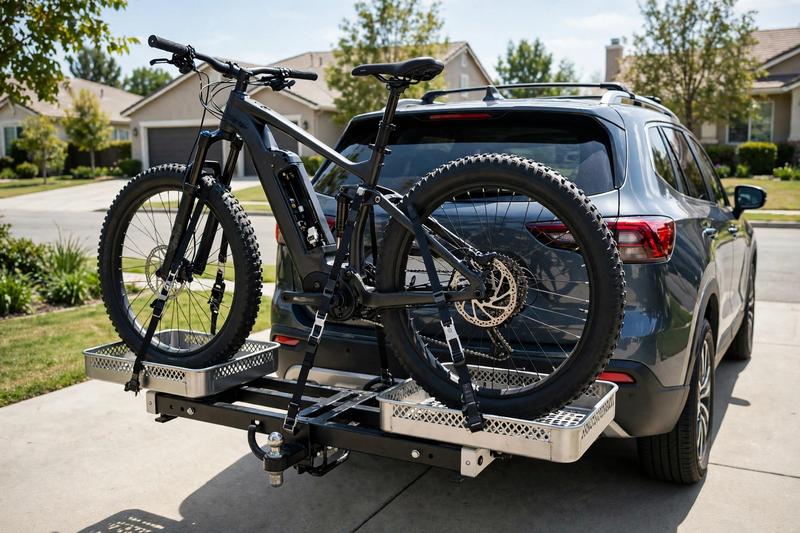
My palms were slick with sweat during my first trail trip. Learning how to transport an ebike by car nearly broke my back and dented my trunk. I tried hoisting a 68-pound cruiser onto a cheap strap rack alone.
The metal pedal gouged my paint before I left the driveway. Since that bad day, I have hauled heavy rides over 4,000 miles without one scratch. Smart gear swaps turned a twenty-minute chore into a four-minute habit.
What Most Guides Miss About How to Transport an Ebike by Car
Knowing how to transport an ebike by car starts with checking hitch tongue weight. Tongue weight is the downward force your car hitch holds without bending on rough bumps.
- Rack weight counts too: A strong two-bike tray rack weighs 50 pounds while empty.
- Wind drag fights frames: Wide tires and tall bars catch highway gusts hard.
- Pedals act like saws: A spinning metal pedal scratches bumper paint in minutes.
My First Big Lesson: Cutting ten pounds off the frame beats buying a pricier rack. A lighter load saves your back and stops hitch bounce.
| Common Advice | My Real-World Test | Better Move |
|---|---|---|
| Use any hitch rack | Bent under 65-pound frame | Buy 60-pound tray rack |
| Leave battery locked in | Added nine pounds of bounce | Pull pack before lifting |
| Use stretchy bungee cords | Stretched loose on highway | Cinch nylon cam straps |
Gear I Actually Use vs. Pricey Items I Skip
You only need a two-inch car hitch, a tray rack, and three flat cam straps. Cam straps are woven belts with metal teeth that lock tight without slipping.
- Two-inch Class 3 hitch: This square steel tube bolts to your car frame for solid support.
- Platform wheel-tray rack: Both tires sit in metal scoops so hooks never crush paint.
- Three one-inch cam straps: I tie down both wheel rims and secure the center post.
- Neoprene pin wrap: This thick rubber wetsuit sleeve blocks rain from bare power plugs.
| Option I Tried | Best Use Case | My Honest Verdict |
|---|---|---|
| Two-inch platform rack | Heavy cruisers and fat tires | Best daily choice by far |
| Ramp tray rack | Riders with sore backs | Worth every extra dollar |
| Strap-on trunk rack | Light road bikes only | Unsafe for heavy frames |
My Step-by-Step Routine for How to Transport an Ebike by Car
I load my ride in three steps: strip weight, roll on, and lock three straps. This exact order protects my back and stops highway sway.
Phase 1: How to Transport an Ebike by Car by Dropping Dead Weight
Always pull out the battery pack and screen before you lift the bike frame. Dropping a ten-pound pack cuts lift weight and saves costly battery cells.
- Unlock the power pack: Slide the pack out and set it on your car floor.
- Wrap the open dock: Strap a dry rubber sleeve over bare pins to block dust.
- Strip loose gear: Pull off water bottles, bags, mirrors, and your clip-on display screen.
Phase 2: Solo Lifting or Ramp Rolling Without Back Strain
Lift one wheel at a time instead of hoisting the whole bike at once. This simple lever move cuts the weight in your hands by half.
- Lock the front brake: Wrap a tight Velcro band around your front brake lever grip.
- Set the front tire: Lift just the front wheel and drop it into the tray.
- Swing the back wheel: Grab the seat frame and lift the rear tire onto its scoop.
My Favorite Solo Trick: Locking the front brake turns your front tire into a solid pivot. The bike never rolls backward down a ramp or slips off mid-lift.
Phase 3: The Three-Point Strap Lock and Shake Test
Ratchet both wheels down tight and loop one backup cam strap around the frame. Push the seat post hard with both hands so the whole car rocks.
- Drop the wheel hook: Push the padded arm down hard onto the front tire rubber.
- Cinch the rim straps: Pull both ratchet belts tight until the rubber tires press down.
- Add a safety belt: Loop a flat cam strap around the frame and rack bar.
| Size / Scenario | Exact Amount | How Often |
|---|---|---|
| Max weight per tray | 60 to 80 pounds | Before buying a rack |
| Hitch tongue limit | 150 pounds minimum | Check once on sticker |
| Highway speed cap | 65 miles per hour | Every freeway drive |
Three Shortcuts That Cut My Loading Time in Half
Marking my wheel trays with bright tape cut my solo load time to four minutes. Simple visual habits stop guesswork when you pack up tired at dusk.
- Tape your tray spots: Stick yellow tape on the rack bar to mark wheel spacing.
- Use a street curb: Back your rear tires near a curb to cut lift height.
- Store bands on bars: Keep two Velcro straps wrapped on your grips for fast reach.
The Curb Trick: Parking near a six-inch curb drops the rack to knee height. Rolling a heavy frame onto the tray feels flat and easy every time.
| Step | Time Needed | Key Shortcut |
|---|---|---|
| Strip battery and bags | 60 seconds | Keep trunk tote open |
| Roll onto wheel trays | 45 seconds | Back near street curb |
| Cinch hooks and straps | 90 seconds | Mark trays with tape |
Where Things Go Wrong on the Road and How I Fix Them
Most road scares come from a loose hitch pin, slack straps, or wet dock pins. You can fix all three problems in two minutes at your first fuel stop.
- Stop hitch clunking: Tighten a U-bolt clamp around the hitch lip with a hand wrench.
- Lock wobbling bars: Strap the front wheel rim directly to the lower frame tube.
- Dry wet dock pins: Wipe damp brass pins with a dry rag before inserting power.
Skip the Tarp: A loose tarp acts like a parachute at sixty miles per hour. It bends rack arms, scuffs paint, and blocks your red brake lights from traffic.
| Warning Sign | Real Cause | My 2-Minute Fix |
|---|---|---|
| Loud bang on bumps | Loose hitch tube gap | Tighten U-bolt hitch clamp |
| Front wheel wobbling | Spinning handlebar stem | Strap wheel to down tube |
| Power error after rain | Damp brass dock pins | Wipe dry and wait |
My Simple Monthly Rack and Hitch Care Habit
A five-minute monthly check of your hitch bolts, straps, and pins prevents road failures. Road salt and hot sun wear down rack parts faster than most drivers think.
- Tighten hitch bolts: Use a hand wrench to keep your hitch pin and U-bolt snug.
- Check strap teeth: Feel every belt and replace any strap with frayed edges or cuts.
- Oil lock cores: Put two drops of dry lube into keyholes so locks never rust.
| My Early Mistake | What Happened | What I Do Now |
|---|---|---|
| Left battery inside bike | Strained my lower back | Store battery on car floor |
| Used thin hook bungees | Hook snapped on pothole | Use one-inch cam straps |
| Never oiled hitch lock | Key jammed at trailhead | Add dry lube monthly |
No, standard car racks buckle under heavy frames. Always use a sturdy platform hitch rack rated for 60 pounds per wheel tray.
Yes, always pull the battery pack before loading up. It cuts lifting weight by ten pounds and protects cells from road vibrations.
Yes, lay the bike down with the chain side facing up. This simple angle keeps your rear gear hanger and shifting parts from bending.
Yes, if you pull the battery and wrap the open pins. Put a snug neoprene sleeve over the frame dock to block fast highway spray.
Keep your highway speed at or below 65 miles per hour. Slower speeds cut wind drag and stop heavy frames from bouncing on rough dips.
My Final Road Rule Before You Turn the Ignition Key
Knowing how to transport an ebike by car takes light lifting and three tight straps. Once you build this four-minute habit, loading up for a weekend ride feels easy.
Take five minutes today to check the hitch weight sticker under your rear car bumper. Then weigh your bike without its battery to know your exact load numbers.

Leave a Reply