
Last fall, my 48-volt pack died two miles from home on a steep hill. Pushing a 65-pound bike home taught me how to prevent ebike battery drain fast. I blamed weak cells, but my own daily habits stole that power.
Over the next six months, I logged every trip with a plug-in watt meter. Small tweaks to tire air, gear shifts, and charging gave me 14 extra miles. You can copy my exact routine today without buying a single new part.
Why I Learned How to Prevent Ebike Battery Drain the Hard Way
Stopping hidden rolling drag and cold loss saves more power than riding slow. Most online guides just tell you to pedal harder, which misses the real culprit.
During my first test week, I rode in level one assist the whole way. My meter still showed a huge power drop on flat city streets. Soft tires and a dry, sticky chain were fighting my motor every single foot.
- Soft tire drag: Losing just 10 PSI eats up to 20 percent of your charge.
- Cold garage storage: Leaving cells at 40 degrees Fahrenheit cuts morning voltage right away.
- Wrong start gear: Launching from a dead stop in high gear spikes motor draw.
- Dirty metal pins: Grime on the pack plug creates heat and wastes stored power.
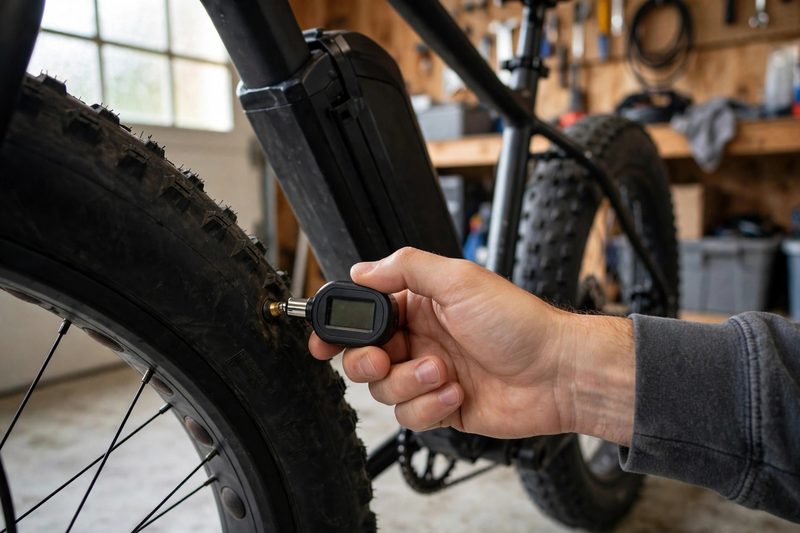
My Aha Moment: I pumped my fat tires from 12 PSI up to 22 PSI. That single two-minute fix added six full miles on my very next commute.
| My Early Mistake | What Happened | What I Do Now |
|---|---|---|
| Rode on soft 12 PSI tires | Lost six miles per charge | Pump to 22 PSI every Monday |
| Left pack in cold shed | Morning bars dropped in minutes | Keep pack inside at 68 degrees |
| Plugged charger into hot pack | Cells lost range in summer | Cool pack for 45 minutes first |
| Used thumb throttle from stops | Motor pulled 750 watts fast | Pedal three turns before thumb power |
Tools I Use to Stop Unwanted Ebike Power Loss
You only need a digital tire gauge, a smart plug, and wet chain lube. Skip pricey battery wraps until you fix basic air pressure and charging time.
I wasted 80 dollars on fancy bike gadgets during my first winter season. Only four cheap items in my tool bag actually changed my daily range numbers.
- Digital tire gauge: Dial gauges drift by five PSI, so I use a digital reader.
- Smart outlet timer: This ten-dollar plug cuts wall power after three hours to stop overcharging.
- Dry wax chain lube: It keeps road grit off the links so the motor spins free.
- Contact cleaner spray: One quick blast clears power-robbing film off the metal battery slots.
Money-Saving Tip: Skip expensive smart chargers if your stock cord works fine. A simple wall timer plug stops charging at 80 percent for ten bucks.
| Option I Tried | Best Use Case | My Honest Verdict |
|---|---|---|
| Digital floor pump | Weekly air checks at home | Must-have tool that saves 15% range |
| Smart timer plug | Stopping charge near 80 percent | Best ten dollars I ever spent |
| Neoprene tube cover | Rides below 40 degrees Fahrenheit | Helps slightly on freezing wind days |
| Cheap dial gauge | Quick roadside tire checks | Skip it because readings drift fast |
My Step-by-Step Routine on How to Prevent Ebike Battery Drain
Follow a three-part habit covering pre-ride checks, smooth shifting, and cool charging. Since I started this exact workflow, my pack lasts two full days longer.
Step 1: Pre-Ride Prep and How to Prevent Ebike Battery Drain Early
Warm up your pack indoors and pump your tires before touching the power button. Ten minutes of prep in your hallway prevents big voltage drops on cold streets.
- Keep the pack inside: Store it near 68 degrees Fahrenheit until five minutes before riding.
- Check tire firmness: Press your thumb hard on the tread or check with your gauge.
- Wipe the brass pins: Rub the pack slots with a dry cloth so current flows clean.
- Lock the mount tight: A loose pack rattles on bumps and sparks across the metal pins.
Step 2: Smart Gear Shifting and Pedal Habits on the Road
Shift down to a low bike gear before every stop sign and steep hill. Starting in a heavy gear forces your hub or mid-drive motor to gulp amps.
- Spin before boosting: Turn the cranks twice in gear two before using pedal assist.
- Keep a brisk spin: Let your legs spin fast and light instead of mashing hard.
- Ease onto the throttle: Roll the thumb lever slowly instead of snapping it wide open.
- Coast early to stops: Cut power 100 feet before red lights and roll in smoothly.
Step 3: Post-Ride Cooling and Safe Charging Rules
Wait 45 minutes after riding before you plug the charger into your warm pack. Charging hot lithium cells bakes the inside chemicals and shrinks total range forever.
I use these exact numbers every day to protect my 48-volt pack from wear. Stick to these safe limits so your cells stay strong for five years.
| Size / Scenario | Exact Amount | How Often |
|---|---|---|
| Road commuter tire air | 50 PSI on paved streets | Check every Monday morning |
| Fat tire street air | 20 to 22 PSI | Check before every second ride |
| Daily charge cap | 80 percent or 52.0 volts | After every normal work commute |
| Full balance charge | 100 percent or 54.6 volts | Once every ten charge cycles |
Quick Shortcuts That Save My Range Without Extra Work
Pre-set your outlet timer and mark your pump gauge to speed up daily care. You do not need a 20-minute checklist to get great mileage every morning.
- Tape your pump dial: Put bright red tape on your exact PSI mark for fast checks.
- Set a three-hour plug: My wall timer shuts off right at 80 percent while I sleep.
- Drop one assist bar: Riding in level two instead of level three adds eight free miles.
My Favorite Shortcut: I shift my bike into first gear whenever I pull into my driveway. That way, I never strain the motor when leaving for work the next morning.
| Step | Time Needed | Key Shortcut |
|---|---|---|
| Morning tire squeeze and check | 30 seconds | Red tape mark on pump gauge |
| Snap warm pack into frame | 15 seconds | Store battery on hallway shoe rack |
| Wipe chain and add lube | 90 seconds | Keep rag clipped to garage stand |
| Set evening charge timer | 10 seconds | Use one-button smart countdown outlet |
Mid-Ride Mistakes That Drain Your Ebike Pack Fast
Sudden power drop on hills happens when you lug the motor in high gear. Watch your handlebar screen bars closely to catch power leaks before walking home.
Even after learning how to prevent ebike battery drain, I still hit weird hiccups outdoors. Wind gusts, sticky brake pads, and loose plugs can mimic a dying cell pack.
Safety Warning: Never charge a pack that feels hot or smells sweet like nail polish. Set it on concrete outside right away to stop a dangerous fire risk.
| Warning Sign | Real Cause | My 2-Minute Fix |
|---|---|---|
| Bars drop two steps on hills | Gear is way too high | Shift down three gears and spin |
| Bike feels heavy while coasting | Disc brake pad is rubbing | Loosen brake bolts and center wheel |
| Screen flickers over road bumps | Battery mount pins are loose | Twist key tight and wipe contacts |
| Range drops fast in autumn | Cold wind chilling the pack | Drop assist one level and pedal |
My Weekly Habit on How to Prevent Ebike Battery Drain
A five-minute Sunday checkup and a monthly full charge keep lithium cells even. Ignoring small care tasks lets rust and cell drift steal your range slowly.
Inside your pack, a tiny circuit board keeps all the small cells at equal power. Letting the charger run to 100 percent once a month helps that board balance every cell.
- Every Sunday morning: Pump both tires, wipe the chain, and spin both wheels off the ground.
- Every tenth charge: Charge to 100 percent plus one hour so all cells match voltage.
- Every winter month: Check stored packs on the screen and keep them near 60 percent.
Real-World Proof: My three-year-old commuter pack still holds 92 percent of its original factory range. Simple weekly care saved me 500 dollars on a new battery pack.
| Common Advice | My Real-World Test | Better Move |
|---|---|---|
| Drain pack to zero monthly | Hurt my range permanently on lithium | Keep charge between 20% and 80% |
| Leave charger plugged in all week | Heated the brick and wore cells | Unplug within one hour of full |
| Coast downhill to recharge pack | Most geared motors cannot recharge | Save brake pads and coast smoothly |
| Store battery in freezing shed | Killed 15% range in one winter | Store indoors at 60 degrees Fahrenheit |
FAQs for how to prevent ebike battery drain
Cold air slows cell chemistry and cuts range by 30 percent. Store your pack indoors at 65 degrees Fahrenheit right until you ride.
Inflating commuter tires to 50 PSI stops soft rubber drag. For fat tires, keep pressure at 20 PSI on paved roads to save power.
Charge your pack to 80 percent for daily trips to stop cell wear. Only fill it to 100 percent right before a long weekend ride.
The internal smart board draws a tiny current while attached to the bike frame. Remove the pack after rides to stop this slow leak.
Riding on pure throttle drains your pack twice as fast as low pedal assist. Save the thumb throttle for starts and steep hills.
Keep your pack at 60 percent charge in a dry room near 60 degrees. Check the power meter once a month during winter breaks.
My Biggest Lesson on Keeping Every Mile of Range
Good tire air and indoor storage beat fancy bike upgrades every single time. Mastering how to prevent ebike battery drain comes down to fighting drag and heat. Once I respected those two rules, my range anxiety vanished for good.
Take five minutes right now to unlock your battery pack and bring it inside. While you are in the garage, pump both tires to their sidewall street rating. You will feel the extra speed and saved power on your very next ride.

Leave a Reply