
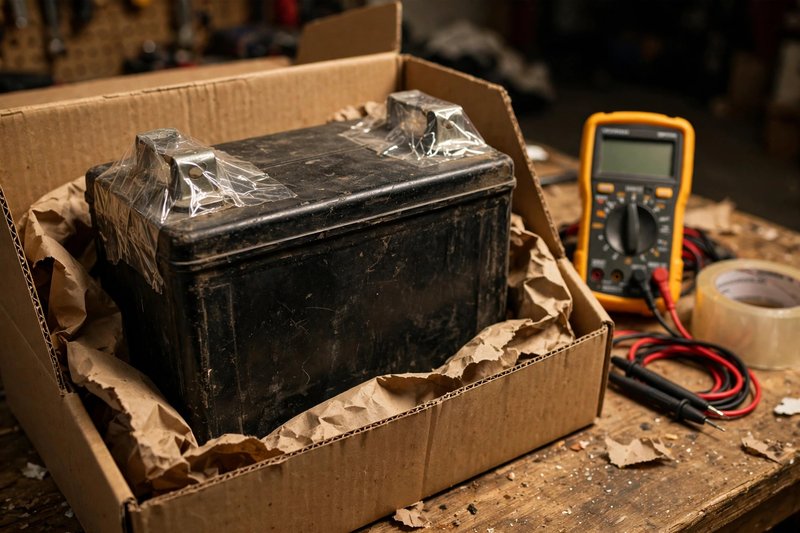
My first dead 48-volt pack sat on my garage bench for eight months. I put off ebike battery recycling because two local bike shops turned me away. Both clerks looked at my dusty black brick like it was a live bomb.
One hot July afternoon, that old pack started smelling sweet and sharp. That strange chemical smell forced me to learn safe disposal rules right away. Since then, I have recycled six worn packs without stress or surprise fees.
What Most Ebike Battery Recycling Guides Leave Out
Most online guides skip the strict tape and charge rules that clerks check first. If you show up with bare metal prongs, shops will refuse your pack fast.
When I tried to drop off my first 500-watt-hour pack, I failed twice. First, the hardware store bin only took small cordless drill packs. My heavy commuter brick was three times too thick for their narrow slot.
Second, I drove across town to a city waste yard on a Tuesday. They only took big bike power bricks on the first Saturday each month. I wasted two hours and drove home with the dead pack in my trunk.
Here is what I check before backing out of my driveway now:
- Call the counter first: Ask if they take packs over 300 watt-hours of power.
- Check brand rules: Many bike shops only take brands they sell on their floor.
- Drain the charge: Bring the power level below thirty percent before your drive.
- Cover every port: Tape over both the charge hole and main output prongs.
My Early Wake-Up Call: Never toss an old bike pack into a home trash bin. Garbage trucks crush the metal cells inside, which sparks huge truck fires within seconds.
These early mistakes taught me how to pass every counter check in ten seconds.
| My Early Mistake | What Happened | What I Do Now |
|---|---|---|
| Left terminals bare | Clerk rejected pack at door | Cover prongs with clear tape |
| Used hardware store bin | Pack stuck in narrow slot | Use staffed bike shop counters |
| Drove without calling first | Waste yard closed for lithium | Confirm hours by phone first |
| Brought a full pack | Staff feared heat and sparks | Drain charge under thirty percent |
Gear I Use for Safe Prep at Home
You only need four cheap household items costing under fifteen dollars to prep a pack. Skip pricey steel fire safes unless your casing is cracked or leaking fluid.
Early on, I almost bought a ninety-dollar steel box after reading scary forum posts. My friend at a repair shop laughed and showed me his bench kit. He uses basic tape and a cheap volt meter that reads stored power.
After taping the ports, he sets the brick inside a sturdy cardboard box. He also keeps a five-pound bag of dry play sand beside his bench. If a damaged pack ever gets hot, dry sand smothers heat and air fast.
Here is the exact kit I keep on my garage shelf today:
- Clear packing tape: Seal flat prongs while keeping back warning stickers easy to read.
- Vinyl electrical tape: Press this into deep plug holes to block stray metal coins.
- Digital volt meter: This ten-dollar tool confirms your pack sits at low voltage.
- Thick nitrile gloves: Wear rubber gloves if the plastic shell shows white crust.
I tested five common home supplies to see what works best during bench prep.
| Option I Tried | Best Use Case | My Honest Verdict |
|---|---|---|
| Clear packing tape | Covering flat contact plates | Best choice for clerk checks |
| Black duct tape | Wrapping cracked plastic shells | Leaves sticky glue on labels |
| Fiberglass fire bag | Hauling warm or dented packs | Worth twenty bucks for safety |
| Plastic grocery bag | Keeping rain off the case | Too thin to stop shorts |
| Heavy cardboard box | Trunk transport to drop site | Great when padded with paper |
My Step-by-Step Ebike Battery Recycling Workflow
My complete home prep routine takes twenty minutes and stops short circuits during car rides. I follow these exact steps in order whenever a pack loses its range.
Step 1: Checking Pack Health and Draining Power
Check the outer shell for bulges first and drain power below thirty percent. A low charge starves the cells so they cannot overheat during transit.
- Inspect the plastic shell: Look closely for splits, puffed sides, or sweet chemical smells.
- Feel the case heat: Touch the middle of the pack with your bare hand.
- Run the bike light: Turn on your headlight for two hours to drain power.
- Test with a meter: Touch the meter probes to the main slots to check volts.
- Let the cells cool: Unplug the brick from the frame and wait thirty minutes.
When my handlebar display shows one bar left, I stop draining right away. Draining a pack to zero volts makes internal copper parts dissolve and short out.
Step 2: Sealing Metal Contacts for Ebike Battery Recycling
Cover every metal prong and charge port with two layers of non-conductive tape. This seal stops loose coins or screws from bridging the positive and negative poles.
When prepping for ebike battery recycling, I never tape over the back rating label. Workers must read the label code, like Li-ion for standard lithium packs. If dark tape hides that sticker, the center treats it as unknown waste.
- Wipe the ports dry: Brush dust and grease off the metal prongs with cloth.
- Press vinyl tape in: Push a short strip of black tape over deep prongs.
- Wrap clear tape over: Lock the black strip down with clear packing tape around.
- Bag the whole brick: Slide the sealed pack inside a thick clear zip bag.
Safety Rule I Never Skip: Never use foil tape or silver duct tape on battery ports. Real metal fibers inside those tapes will bridge the prongs and spark an instant fire.
Step 3: Finding Verified Drop-Off Counters Near Me
Use the Call2Recycle map online to find bike shops that take your brand free. Big hardware stores reject bike packs, so bike counters save you a wasted trip.
I enter my zip code on Call2Recycle and turn on the e-mobility filter. That program teams up with two hundred brands to run free shop drop-offs. For cheap online imports, I call my county hazardous waste depot instead.
My county yard charges five dollars for unbranded packs, beating pricey mail-in boxes. Before driving, I wedge the boxed pack tightly on my rear car floor.
| Step | Time Needed | Key Shortcut |
|---|---|---|
| Check shell and drain charge | Ten minutes active | Run headlight in garage |
| Tape prongs and bag pack | Three minutes total | Keep clear tape over labels |
| Locate verified drop shop | Five minutes online | Filter map for e-mobility |
| Wedge box on car floor | Two minutes flat | Pad sides with old towels |
Fast Shortcuts That Cut My Prep Time in Half
You can cut your prep time in half with four simple garage habits. These small tweaks turned a two-hour chore into a ten-minute errand for me.
In my second year riding commuters, I helped three neighbors clear out dead packs. Handling four packs at once forced me to drop slow habits right away.
- Snap a label photo: Photograph the watt-hour sticker so you can read specs fast.
- Keep a trunk crate: Leave a plastic milk crate in your trunk for boxes.
- Ask for trade cash: Some shops take twenty dollars off a replacement battery pack.
- Pair with chain care: Drop off your old pack when buying new brake pads.
My Time-Saver: Tape two pre-cut tape strips inside a small bag on your charger. When your pack finally dies, your prep supplies are already waiting in your hand.
I also tested popular internet shortcuts that promised easy prep but failed in practice.
| Common Advice | My Real-World Test | Better Move |
|---|---|---|
| Soak pack in saltwater bath | Rusted prongs and trapped charge | Drain power using bike headlight |
| Freeze dead pack overnight | Caused wet moisture on board | Store dry at sixty degrees |
| Pry case open for cells | Sparked a metal strip fast | Recycle the whole sealed pack |
| Leave pack at scrap yard | Metal yard banned lithium bricks | Use a bike shop counter |
Where Drop-Off Trips Usually Go Wrong
Most drop-off problems happen when a pack shows crash damage or lacks a sticker. Knowing how to handle puffed cases and faded ink saves you wasted drives.
Last spring, I crashed on sharp rocks and cracked my lower battery case. By the next morning, the plastic seam bulged out a quarter inch. My regular bike shop refused to bring a swollen pack inside their store.
Swollen or hot packs need special handling at county hazardous waste yards instead. I skipped the bike shop and set my pack in a steel bucket outside. I poured dry sand around the brick and called my county hazmat crew.
Heat Warning: If a pack hisses, pops, or smells sweet, move it outside right away. Set it on bare concrete ten feet from walls and call the fire department.
Use this quick guide to fix common hiccups before loading up your car.
| Warning Sign | Real Cause | My 2-Minute Fix |
|---|---|---|
| Faded watt-hour sticker | Sun and rain wore ink | Multiply volts by amp-hours yourself |
| Stuck frame lock key | Rust inside the lock barrel | Unbolt the whole mount bracket |
| White crust near ports | Road salt leaked inside case | Double bag with thick plastic |
| Puffed plastic side panel | Gas buildup inside bad cells | Bury in sand bucket outside |
My Monthly Habit That Doubles Pack Life
You can delay ebike battery recycling by keeping your charge between twenty and eighty percent. A five-minute monthly check doubled my second pack’s life from three years to six.
My first pack died early after sitting in a freezing shed all winter. Cold charging coats internal parts with metal and kills storage capacity forever. Now I store my pack indoors whenever outdoor temps drop below forty degrees.
Here is the simple routine I follow on the first Sunday every month:
- Check the rest volts: Plug in for one hour if charge drops below forty percent.
- Unplug before full charge: Pull the wall plug when the meter hits eighty percent.
- Wipe the rubber seals: Clean mud off the port cover with a dry cloth.
- Store in cool shade: Keep the brick on a shelf around sixty degrees Fahrenheit.
These safe limits keep my current 48-volt pack strong after four hundred rides.
| Size / Scenario | Exact Amount | How Often |
|---|---|---|
| Daily commuter charging | Charge to eighty percent max | After every second work ride |
| Cell balancing top-up | Charge to one hundred percent | Once every thirty days |
| Winter indoor storage | Hold at fifty percent charge | Check level once a month |
| Safe room temperature | Fifty to seventy degrees indoors | Every day all year |
FAQs for ebike battery recycling
Partner bike shops take over 200 brands for free via Call2Recycle. County waste yards charge zero to fifteen dollars for off-brand packs.
Most big hardware stores reject ebike packs because they exceed 300 watt-hours. Their front drop bins only take smaller cordless power tool batteries.
Never put lithium packs in curbside bins because garbage trucks crush the cells. That pressure triggers hot chemical fires inside the collection truck.
Processors shred the pack and save 95 percent of the cobalt and copper. Those clean metals go right into making new lithium battery cells.
Place a swollen pack outdoors in dry sand ten feet away from buildings. Call your county hazardous waste line instead of driving it to a shop.
Yes, counters accept locked packs once removed from your bike frame. Unbolt the mounting plate or ask a bike mechanic to drill the lock cylinder.
Your Five-Minute Starter Plan for Old Packs
Getting an old lithium pack out of your garage safely takes just five minutes today. You do not need special tools or expensive shipping boxes to do it right.
Grab clear tape right now and seal the metal prongs on your dead pack. Next, photograph the back label and check Call2Recycle for a free drop-off counter nearby. You will clear out a fire risk today and keep heavy metals out of landfills.

Leave a Reply